Trues Toys
Trues Toys
Trues Toys
High-precision manufacturing engineered for safety, compliance, and child development.

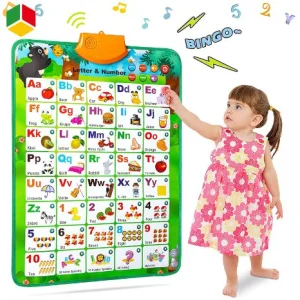
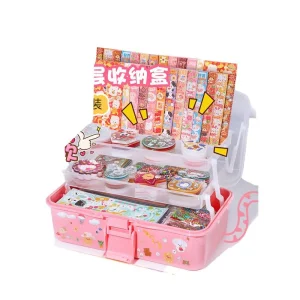
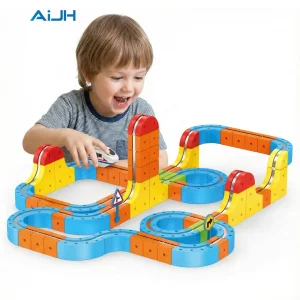
In the contemporary global toy industry, "building toys" are no longer simple geometric blocks intended solely for recreational diversion. They have transformed into complex cognitive toolkits that foster spatial reasoning, early-stage engineering principles, and creative critical thinking. In this detailed whitepaper, we dissect the state of custom building toys manufacturing, from material science advancements to the strict international compliance frameworks required to serve enterprise-level buyers. As strategic manufacturers and suppliers, we recognize that our commercial clients—ranging from educational institutions to global retail giants—demand a synergy of scalability, security, customizability, and absolute regulatory conformity.
Information Gain Indicator: True value in toy sourcing is defined not merely by visual aesthetic, but by structural and mechanical tolerances. Specifically, the "clutch force" of high-grade ABS construction blocks must be calibrated within a target of 1.5 to 3.5 Newtons to balance structural resilience and child ergonomics.
The acquisition of customized play systems and building sets by multinational enterprises requires an analytical, multi-layered procurement strategy. Enterprise buyers must balance cost efficiency with risk mitigation. Supply chain resilience, vendor code of conduct audits (such as BSCI and SMETA), and structural capacity assessments are critical criteria for selection. Large-scale procurement departments must evaluate prospective manufacturing partners on three vital dimensions: raw material traceability, tooling capabilities, and logistical risk diversification.
We solve these supply chain friction points by providing full visibility into our material supply chain. For example, our plastic-based building elements utilize premium, virgin Acrylonitrile Butadiene Styrene (ABS) or high-density polyethylene (HDPE). These compounds are selected for their impact resistance, dimensional stability, and lack of secondary chemical off-gassing. For clients demanding bio-based or wood alternatives, our timber materials are harvested exclusively from FSC-certified forests, ensuring that every batch complies with sustainable ESG objectives.
Creating custom building toys requires rigorous engineering workflows. The journey from conceptual sketch to global retail distribution is broken down into structured technical milestones:
Phase 1: Conceptual Design & DFM Review (Design for Manufacturing). Initial designs undergo finite element analysis (FEA) to detect potential stress concentrations and points of failure. The goal is to maximize part lifespan while ensuring safety during high-stress activities (e.g., dropping or stepping on parts).
Phase 2: Ultra-Precision Mold Fabrication. The mold is the heart of plastic building components. Using multi-axis CNC machines and electrical discharge machining (EDM), our toolmaking division produces hardened steel molds capable of maintaining tight tolerances (within ±0.005mm). This level of precision is necessary to maintain consistent clutch power across millions of production units.
Phase 3: Automated Injection Molding & Assembly. Our production facilities employ automated closed-loop injection molding machines. These systems continuously monitor temperature, injection pressure, and cooling cycles to prevent warping or structural weakness in the final product.
The intersection of technology and tangible physical play is reshaping the future of building systems. We are investing in several key developmental paths:
For children's products, compliance is an absolute requirement, not an option. Our global manufacturing practices meet or exceed the most stringent international standards:
EN71 & REACH (European Union): All products undergo testing for mechanical properties, flammability, and the migration of certain elements (heavy metals, organic chemical compounds, and plasticizers/phthalates).
ASTM F963 & CPSIA (United States): We ensure compliance with strict limits on lead content and phthalates, and conduct rigorous small parts tests to prevent choking hazards.
ISO 8124: This standard guides our mechanical and physical property evaluations, ensuring safety across varying temperature and humidity conditions in global markets.
The structural pillars that define our manufacturing precision and client relations.
Implementing precision inspections and strict dimensional tolerance controls at every stage of production.
Maintaining material traceability, regular factory audits, and reliable global compliance verification.
Providing responsive engineering consultation and design customization options to meet shifting market trends.
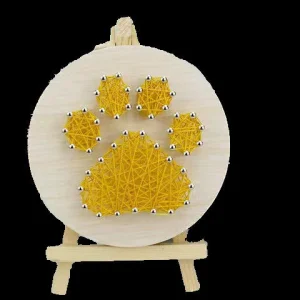
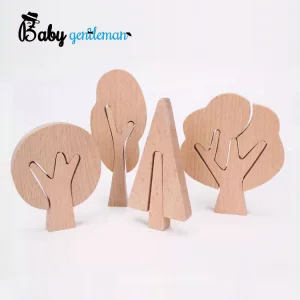
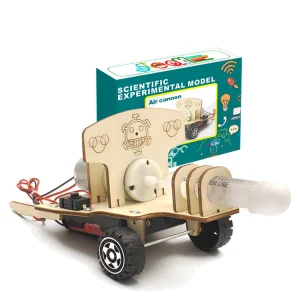
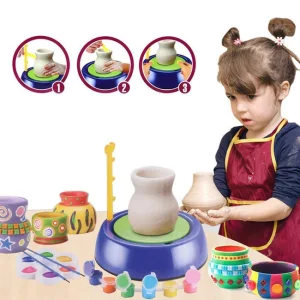
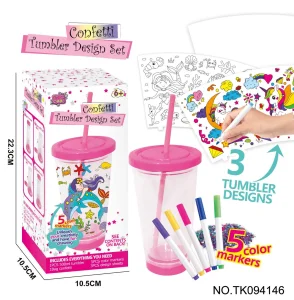
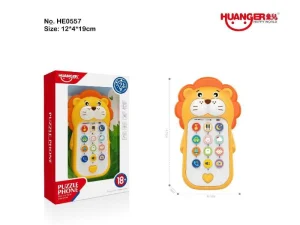
Explore our industrial range of custom components, DIY arts, and educational playsets.

Answering key structural, compliance, and procurement questions for international B2B buyers.
For custom OEM/ODM injection molds, the prototyping and tooling phase takes approximately 30 to 45 days. Once the tool design is finalized and approved, standard mass production cycles run between 25 and 35 days, depending on batch volume and customization complexity.
Every batch of ABS raw material is tested for safety before entering production. Our finished items undergo third-party laboratory evaluations (SGS, Intertek, or TÜV Rheinland) to confirm alignment with CPSIA, ASTM F963, and EN71 standards, ensuring heavy metals, phthalates, and flame retardants are well below legal thresholds.
Yes, our design-for-manufacturing (DFM) reviews allow us to modify structural dimensions to adjust block clutch power. Standard targets are calibrated to a 1.5–3.5 Newton range, ensuring a secure fit while allowing children to assemble and disassemble the blocks without strain.
Yes, we offer FSC-certified kraft paper boxes, water-based printing inks, and bioplastic compounds like PLA and wood-plastic composites (WPC) to support our clients' sustainability goals.