Trues Toys Trues Toys

Why Do Kids Learn Through Playing With Toys 7 Tips?

Time:2026-11-07 Author:Mason
0%

A wooden block becomes a bridge, then a tower, then a crash that makes a child laugh. In that small scene, play involves choice, movement, language, and problem-solving. Why do kids learn through playing with toys? Toys give children something real to handle while they test ideas and notice what happens. A puzzle piece may not fit. A doll’s blanket may need folding again. These ordinary moments invite practice without making every mistake feel like a failure.

Play does not guarantee instant learning, and children develop at different speeds. Still, developmental research connects playful experiences with skills such as communication, coordination, imagination, and early reasoning. The value often lies less in owning the newest toy and more in how a child uses it. A cardboard box, a set of blocks, or a simple ball can lead to surprising discoveries. Sometimes adults step in too quickly. It is worth pausing and watching first.

The seven tips in this guide focus on practical ways to make toy play more meaningful. They include choosing age-appropriate toys, leaving room for open-ended play, and talking with children about what they are doing. You will also find ideas for encouraging movement, sharing, and creative problem-solving. Keep activities safe and follow the toy maker’s age guidance. Most of all, notice the child’s interests. A plan may help, but play rarely follows one perfectly.
Why Do Kids Learn Through Playing With Toys 7 Tips?

How Toy Play Supports Children's Cognitive, Social, and Physical Development

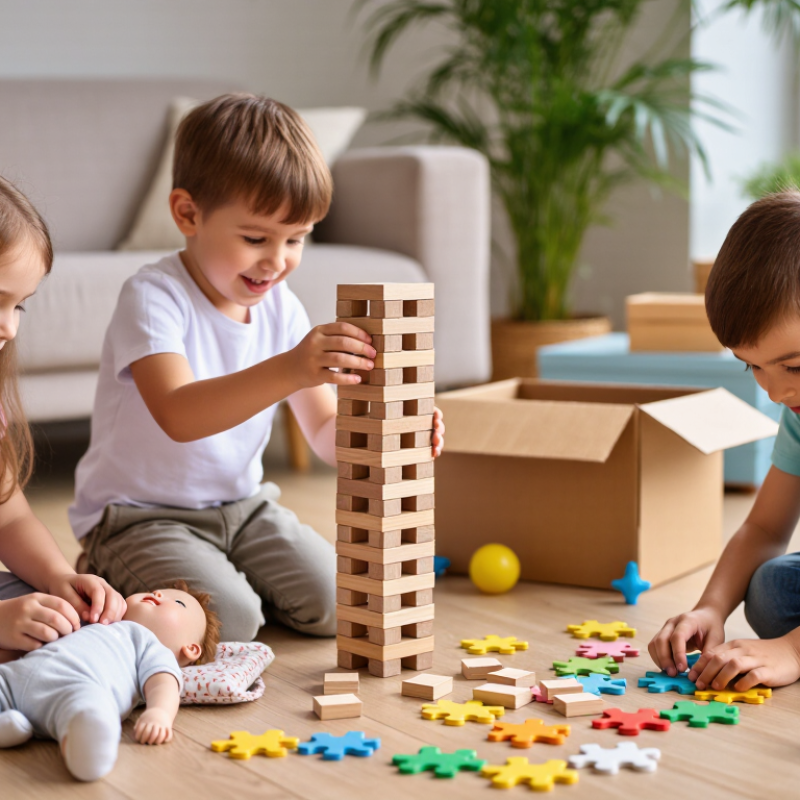
When a child stacks wooden blocks, knocks them down, and starts again, play is doing serious work. Choosing a block and testing where it balances builds early problem-solving skills. Pretend play also exercises memory and language: a toy cup can become “tea” for a stuffed animal. Small moments count.

Tips: Offer open-ended toys such as blocks, crayons, and dolls. Ask, “What could happen next?” Then give your child time to answer. During pretend play, take turns adding ideas, rather than directing the whole story. It can feel slow. That pause lets children practice making choices and explaining them.

Toy play supports social and physical growth, too. A simple board game gives children chances to wait, follow rules, and handle small disappointments. Rolling a ball, threading large beads, or fitting puzzle pieces develops coordination and hand control. Tip: Choose activities that are a little challenging, but not frustrating. Stay nearby, especially with small pieces, and adapt play to your child’s age and abilities. Adults do not need to turn every game into a lesson; sometimes a child’s unusual idea is worth following, even when the play gets messy.

How to Choose Toys That Match a Child's Age and Interests

Choosing a toy by age is a useful starting point, not a complete answer. Check the age guidance on the packaging, especially for small parts that may pose a choking risk to young children. Then consider what your child can manage today. A toddler may enjoy stacking three soft blocks, while an older child might prefer building a bridge that stays upright. Keep it simple. If a toy causes repeated frustration, offer an easier version or play together for a while.

Interests matter just as much as developmental stage. A child who loves pouring water may spend longer with cups in the bath than with a flashy electronic toy. One who asks how things work might enjoy sturdy puzzles, pretend tools, or blocks with different shapes. Watch closely. Does your child return to the toy, invent new uses, or lose interest after a minute? Those small clues can guide your next choice. Adults sometimes mistake a favorite theme for a guaranteed favorite toy; a dinosaur figure may delight one child and sit untouched by another. It is reasonable to change your mind after seeing how a toy is actually used. Choose items that invite safe exploration, fit your child’s abilities, and leave room for their own ideas.

Why Do Kids Learn Through Playing With Toys? 7 Tips: How to Choose Toys That Match a Child's Age and Interests
Tip Age Range Choose Toys That Match What Children Can Practice Safety and Selection Notes
1. Follow the child’s current stage Birth–12 months Easy-to-grasp rattles, textured cloth books, and toys that make gentle sounds. Reaching, grasping, listening, visual tracking, and cause-and-effect exploration. Choose items made for infants, inspect them for damage, and avoid small parts, loose cords, and items that could obstruct breathing.
2. Choose toys that invite movement 1–2 years Large blocks, push-and-pull toys, nesting cups, and sturdy balls. Walking, coordination, stacking, problem-solving, and early spatial awareness. Look for stable, durable toys with no sharp edges. Keep small parts away from children under 3 because they may pose a choking risk.
3. Make room for pretend play 2–3 years Dolls, toy dishes, play vehicles, simple costumes, and pretend-play sets related to familiar routines. Imagination, language, social interaction, and practicing everyday experiences. Choose age-appropriate pieces and check labels and instructions, especially when a set contains small accessories.
4. Match toys to growing interests 3–5 years Art materials, dress-up items, chunky construction pieces, puzzles, and toys inspired by animals or stories the child enjoys. Creative expression, fine-motor control, storytelling, persistence, and early reasoning. Use art supplies labeled for children and follow product directions. Supervise activities that involve scissors or other tools.
5. Offer open-ended choices 4–6 years Building sets, blocks, play dough, loose craft materials, and simple role-play props. Planning, experimentation, flexible thinking, and creating more than one solution. Choose pieces suited to the child’s age and ability. Store small components safely when younger children are nearby.
6. Let the child help choose Any age Toys connected to the child’s preferred activities, such as music, movement, nature, vehicles, or making things. Motivation, independence, sustained attention, and confidence through self-directed play. Offer a few suitable options rather than relying on age labels alone; children of the same age can have different abilities and preferences.
7. Prioritize safe, active play over more features Any age Simple toys that encourage conversation, movement, building, sorting, or imaginative play. Shared attention, communication, problem-solving, and learning through hands-on exploration. Check age recommendations, warnings, and recall information. Regularly inspect toys for broken parts, loose batteries, or other hazards.

Seven Practical Ways to Turn Toy Play Into Learning

Toy play teaches more when adults add a small, purposeful prompt. Choose open-ended toys, such as blocks, and ask a child to describe what they are making. Then pause. Invite them to count pieces or sort them by shape. Keep it simple. The American Academy of Pediatrics’ 2018 clinical report, “The Power of Play,” describes play as supporting language, self-regulation, and executive function. Follow the child’s interest; a tower may matter more than the lesson you planned.

Try seven practical moves:

  • offer open-ended materials;
  • ask children to explain their ideas;
  • count or sort objects together;
  • set a gentle building challenge;
  • use pretend play to explore everyday roles;
  • take turns and agree on simple rules;
  • invite children to notice what worked and change their plan.

A 2008 study in Child Development found that four sessions with a linear number board game improved preschoolers’ numerical knowledge compared with a color-board control game. Small games count.

Some days, this flops. If a child ignores your question, narrate one observation instead: “That blue block is wider.” Give them time to respond, and avoid turning every play moment into a quiz. For safety, choose age-appropriate toys and stay nearby when small pieces are present. Then let the child lead again.

How Adults Can Encourage Play Without Taking Over

A child may turn a cardboard box into a shop, cave, or noisy spaceship. Adults can support this learning by offering safe, simple materials and letting the child decide what they become. Put out blocks, fabric, and a few toy animals, then leave room on the floor. Then wait. A pause gives children time to invent their own direction.

Watch before joining. Notice whether the child is sorting pieces, repeating an action, or making up a story. If they seem absorbed, resist the urge to suggest a better way. When they invite you in, follow their idea: buy an imaginary apple, or let them assign you a small role. Ask open questions, such as “What happens next?” rather than testing them for the right answer. That difference matters.

Some play gets frustrating. A tower may fall, or a puzzle piece may not fit. Stay nearby and give the child a moment to try again before stepping in. You might say, “That piece keeps slipping,” and let them choose what to do. Offer help when they ask, or when safety requires it, but avoid fixing every small problem. Adults often jump in because silence feels awkward; I do, too. Sometimes the useful choice is simply to sit on the rug and watch.

How to Create a Safe and Engaging Play Environment

A safe play space begins with the child’s age, abilities, and interests. Choose sturdy toys without sharp edges, loose parts, or pieces that could pose a choking risk. Clear the floor, secure tall furniture, and keep play areas visible from where adults spend time. Get down low. Look for hazards a child might reach, such as cords or unstable shelves. Check toys regularly for cracks, missing pieces, and worn parts.

Make materials easy to reach with low, open bins, and leave enough room for movement. Rotate a few toys rather than filling every shelf; too many choices can make play feel crowded. Offer different textures, blocks, books, and pretend-play objects, while keeping noise and lighting comfortable. The American Academy of Pediatrics’ clinical report, “The Power of Play” (2018), describes play as supporting children’s development and relationships. Safety matters, too: the U.S. Consumer Product Safety Commission estimated 231,700 toy-related emergency-department injuries among children aged 14 and younger in 2023. That figure covers treated injuries, not every minor accident. Even careful adults miss things sometimes. Check again.

FAQS

How should I choose a toy for my child’s age?

Check the age guidance and consider what your child can manage today. A toddler may enjoy stacking three soft blocks. Keep small pieces away from young children.

Should I choose toys based on my child’s interests?

Yes. Notice which toys your child returns to and how they use them. A dinosaur figure may delight one child and stay untouched by another.

How can toys support learning?

Use blocks to practice counting, sorting, or describing ideas. Ask one gentle question, then give your child time to respond. Small games count.

What if my child gets frustrated with a toy?

Try an easier version or play together briefly. If a tower falls, let your child try again before stepping in. That can be hard to remember.

How can I encourage pretend play?

Offer simple materials, such as a cardboard box, fabric, and toy animals. Let your child decide whether the box becomes a shop or a cave.

How can I join play without taking over?

Watch first. When invited, follow your child’s idea or take a small role. Ask, “What happens next?” rather than testing for a right answer.

What should I do when my child ignores my question?

Narrate a simple observation, such as, “That blue block is wider.” Then wait. The pause may feel awkward.

When should I offer help during play?

Stay nearby and help when your child asks or safety requires it. Avoid fixing every small problem; children may want another chance to try.

Conclusion

Why do kids learn through playing with toys? Play gives children a hands-on way to explore ideas, solve problems, use their imagination, and make sense of the world. As they build, sort, pretend, and experiment, they practice thinking skills while also developing coordination and confidence. Playing with others can help them share, communicate, take turns, and understand different points of view. Toys are most useful when they suit a child’s age, abilities, and interests, offering enough challenge to keep play engaging without causing frustration.

Everyday play can become a learning opportunity through simple activities: ask open-ended questions, invite children to tell stories, encourage them to try different solutions, and connect toys with counting, movement, or creative expression. Allow children to lead, stepping in with gentle suggestions rather than taking control. A safe, welcoming play space with room to explore and a manageable selection of toys helps children focus and enjoy independent or shared play. These practical habits make play both fun and supportive of healthy development.

Mason

Mason

Mason is a seasoned marketing professional with a deep expertise in the company's offerings and a passion for driving brand awareness. With a strong background in digital marketing strategies, he has an innate ability to connect with diverse audiences and effectively communicate product benefits.......