Trues Toys Trues Toys

Why Should You Choose Toys for Group Play?

Time:2026-11-14 Author:Isabella
0%

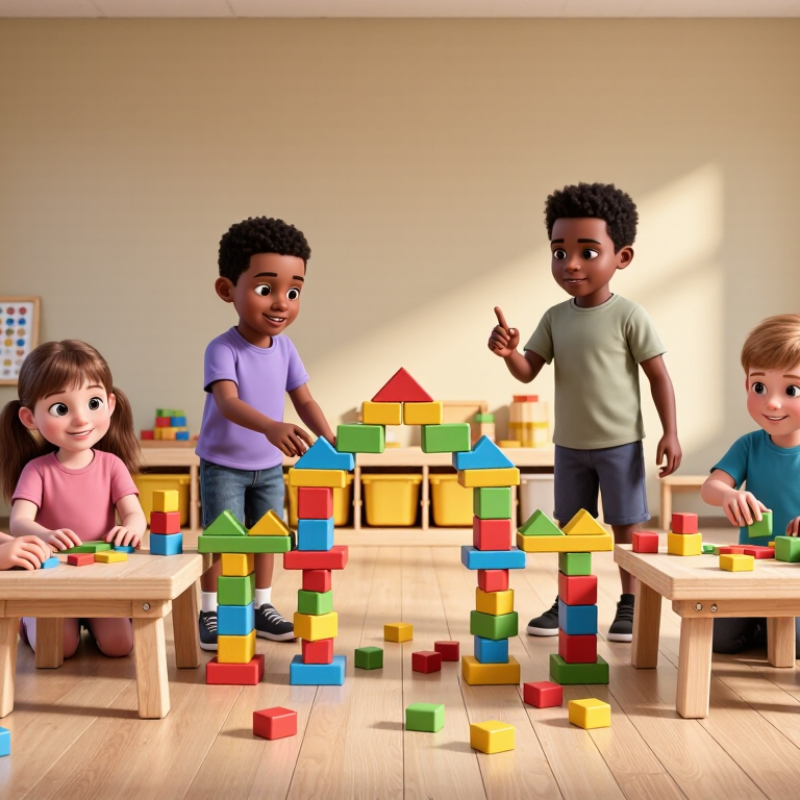
Choosing toys for group play is not just a matter of buying several identical items. The right choice can invite children to share ideas, negotiate roles, and build something together. A box of blocks, for example, gives a group room to plan a bridge, test it, and start again when it falls. Small details matter: enough pieces, clear shared goals, and options for different abilities can make participation easier.

Evidence supports the value of play, though no single toy guarantees a good group experience. The American Academy of Pediatrics’ 2018 clinical report, coauthored by pediatrician and play expert Dr. Michael Yogman, states: “Play is not frivolous: it enhances brain structure and function and promotes executive function.” UNICEF and the LEGO Foundation’s Learning through Play report also describes play as a way children develop essential knowledge and skills. These reports offer a stronger basis than product claims alone.

How to choose toys for group play starts with observing the children: their ages, interests, space, and comfort sharing materials. Look for toys that support cooperation without forcing every child into the same role. A cooperative board game may suit one group; loose building materials may work better for another. Watch what happens after the toy comes out. Do children invite others in, or does one child control every piece? That answer may matter more than the package label. There is no perfect choice. Group dynamics change, and adults may need to adjust.
Why Should You Choose Toys for Group Play?

What Defines a Toy for Group Play?

A toy for group play lets two or more children shape the activity together. It offers shared materials, clear turns, and room for different roles. Think of wooden blocks spread across a low table: one child builds a bridge, another tests toy cars, and a third adds a river. The play can change direction. That flexibility matters more than a fixed number of players printed on a box.

The LEGO Foundation’s 2017 report, What We Mean by Learning through Play, identifies five qualities: joyful, meaningful, actively engaging, iterative, and socially interactive. These are useful design checks. A good group-play toy encourages children to talk, try an idea, and adjust it together. The American Academy of Pediatrics’ 2018 clinical report, The Power of Play, also describes play as supporting social-emotional and cognitive development. A toy need not teach a lesson. It should make cooperation possible without dictating every move.

Look for pieces that are easy to share, sturdy enough for repeated handling, and simple to understand without lengthy adult instructions. Cooperative goals can help, but competition is not automatically a flaw; children may enjoy taking turns to win. Still, a game that leaves one child waiting too long can quietly exclude them. I’d question any “group” toy that only works when everyone follows one narrow script. Children rarely do.

How Shared Toys Encourage Cooperation and Communication

Why Should You Choose Toys for Group Play?

A shared toy gives children a reason to talk, listen, and make decisions together. With a tub of blocks, one child might build a tower while another finds a stable base. They can ask for pieces, explain an idea, or change the plan when the tower wobbles. Pretend-play toys, such as a small kitchen set, invite children to assign roles and create a story. These exchanges offer everyday practice in cooperation, turn-taking, and expressing needs. Small moments matter.

Tips: Choose toys with flexible uses, such as blocks, play food, or a ball. Offer enough pieces to reduce waiting, but leave room for children to share. Try asking, “What could you build together?” Then give them time to work it out.

Group play is not always peaceful. Two children may want the same red block, or one may reject another’s idea. That can be awkward. Calm adult guidance can help children name the problem and suggest a fair next step, without taking over the game. Not every activity will suit every group; watch how children respond, and adjust the toy, space, or group size when needed.

Developmental Benefits of Playing Together

Group-play toys give children a reason to talk, plan, and respond to one another. A basket of blocks, for example, may lead children to decide what to build and who will find the blue pieces. Those exchanges practise listening, sharing ideas, and using new words. Children also learn to wait for a turn, even when they are excited to add the next block. Small moments matter.

Playing together can strengthen problem-solving and flexible thinking. If a cardboard ramp collapses, children might test a wider base or change its angle. They practise hand control while stacking, sorting, or fitting pieces together. Pretend-play sets can invite children to negotiate roles and notice how a story changes when someone contributes a new idea. Not always smoothly. Disagreements happen. With calm adult support, children can name what feels unfair, hear another perspective, and try a solution. The play may still end with a lopsided tower or unfinished game. That is part of the learning, too. Adults can choose toys with pieces that are easy to share and allow more than one way to play, while watching whether every child gets a chance to join.

Safety and Accessibility in Group-Play Toys

Group-play toys should let children join without pushing, reaching over others, or waiting too long. Safety begins with sturdy construction, smooth edges, and parts suited to the intended age range. Check seams, loose pieces, and cleaning instructions before a session. Shared toys pass through many hands. Small details matter.

Accessibility is part of safety, too. Choose pieces that are easy to grip, see, hear, and understand. Large handles can help children with limited hand strength; high-contrast colors may make pieces easier to find. Offer different ways to participate, such as placing a piece, pointing, or taking a speaking turn. Keep the play surface reachable from seated positions, with clear space around it.

In a real group, needs can differ sharply. A toy that feels simple to one child may frustrate another, so observe before changing the rules. That takes practice. Avoid assuming every child wants the same sensory input or level of competition. Remove damaged pieces, and clean shared toys according to their material and care guidance. An adult check helps, but children should also be invited to say when something feels uncomfortable or hard to use.

How to Choose Toys for Different Groups and Settings

Why Should You Choose Toys for Group Play?
How to Choose Toys for Different Groups and Settings

Choosing toys for a group starts with the children, not the toy shelf. Consider their ages, abilities, interests, and how many will play together. A set of large building pieces may suit a small preschool group, while cooperative board games can work well for older children. Check that pieces are sturdy, easy to clean, and suitable for the age range. In a busy classroom, quick setup matters. At home, a toy that can be stored in one basket may be more practical. Small details count.

Tips: Choose toys with more than one way to play. Look for pieces that are easy to share and replace. For mixed ages, avoid small parts around younger children. Keep it simple.

Think about the setting, too. Outdoor groups may enjoy balls or chalk, while indoor spaces often call for quieter, compact activities. A shared project can encourage conversation, but not every child will want to take turns in the same way. Offer a few roles, such as builder, sorter, or storyteller, so children can join at their own pace. I have sometimes underestimated how much waiting a popular toy creates. A second activity nearby can help, though it may not solve every disagreement.

Why Should You Choose Toys for Group Play? - How to Choose Toys for Different Groups and Settings
Group and Setting Suitable Toy Types What to Look For Group-Play Benefits Safety and Practical Considerations
Toddlers in a home or childcare room
Small groups with close adult supervision
Large interlocking blocks, chunky puzzles, nesting cups, pretend-play objects Simple actions, sturdy construction, pieces that are easy to grasp, and opportunities to take turns Encourages imitation, early communication, sharing space, and parallel play Follow the age grading and warnings on the product. Avoid small parts that could pose a choking hazard, and choose toys that can be cleaned regularly.
Preschool children in a classroom
Small groups rotating among activity areas
Building sets, dramatic-play props, matching games, art materials, cooperative puzzles Open-ended play options, clear ways to share materials, and enough pieces to reduce waiting Supports language practice, pretend play, problem-solving, and collaboration Check that materials are age-appropriate and in good condition. Use washable, non-toxic art supplies as directed by their labels.
Elementary-age children in an after-school club
Small or medium-sized teams
Team board games, construction kits, science activity sets, card games, cooperative challenges Rules that are easy to explain, adjustable challenge levels, and roles that keep all players involved Practices planning, communication, turn-taking, and respectful competition Check the recommended age range, count pieces before and after play, and store small components securely when younger children are present.
Mixed-age family or community group
Children with different ages and abilities
Large-format building materials, simple cooperative games, play scarves, pretend-play sets Multiple ways to participate, flexible rules, accessible components, and activities that do not depend on reading ability Creates shared play opportunities while allowing children to contribute at different skill levels Choose toys suitable for the youngest child who will use them. Keep age-restricted or small-piece toys separate when needed.
Outdoor group play at a park or schoolyard
Small to large groups with open space
Soft balls, cones, beanbags, jump ropes, large outdoor construction pieces Durable materials, simple group rules, flexible team sizes, and equipment suited to the available space Encourages movement, coordination, cooperation, and inclusive group games Inspect equipment for damage before use, keep play areas clear, and supervise activities according to the children’s ages and abilities.
Quiet or indoor shared space
Libraries, waiting areas, or small rooms
Quiet puzzles, magnetic drawing boards, story props, compact cooperative games Low-noise play, compact storage, easy setup, and activities that can be paused or shared Provides opportunities for conversation, concentration, and calm turn-taking Prefer easy-to-clean materials and contained pieces. Check that the activity is appropriate for the space and does not create trip hazards.

FAQS

What makes a toy suitable for group play?

It lets two or more children shape an activity together. Shared pieces, clear turns, and flexible roles can help. The player count on the box matters less.

How can blocks encourage children to cooperate?

One child might build a bridge while another tests a toy car. A third can add a pretend river. The plan can change.

What skills can children practise during group play?

They practise listening, sharing ideas, waiting, and using new words. Small moments matter.

Can group-play toys support problem-solving?

Yes. If a cardboard ramp collapses, children might widen its base or change its angle. Their first fix may not work.

Do group games need to be cooperative?

No. Children may enjoy taking turns to win. Still, long waits can leave one child out.

What should adults look for when choosing a group-play toy?

Choose sturdy pieces that are easy to share and understand. Look for more than one way to play.

How can pretend-play sets help children?

Children can negotiate roles and build a story together. A new idea may change the whole scene.

What can adults do when children disagree during play?

Help them explain what feels unfair and listen to each other. The game may still end unfinished. That happens.

Conclusion

Toys for group play are designed to be shared, inviting several children to participate, take turns, and contribute to a common activity. From cooperative games and building materials to pretend-play props, these toys can encourage communication, negotiation, creativity, and problem-solving. Playing together also gives children opportunities to practice patience, empathy, and teamwork while learning from one another at their own pace.

When considering How to choose toys for group play, think about the children’s ages, interests, abilities, and the size of the group. Choose durable, age-appropriate toys with accessible rules and enough pieces or roles for everyone to join in. Check that materials and parts are suitable for the intended users, and consider where the toy will be used, such as at home, in a classroom, or outdoors. A thoughtful choice helps make shared play welcoming, safe, and enjoyable for the whole group.

Isabella

Isabella

Isabella is a dedicated marketing professional with a sharp focus on driving brand growth and engagement through strategic content creation. With an extensive background in digital marketing, she combines her passion for storytelling with her keen understanding of industry trends to deliver......