Trues Toys
Why Do Toys Help With Emotional Growth in Children?
Why do toys help with emotional growth? The answer begins with play, not the toy’s price, brand, or technical features. A wooden train can become a family leaving home. A soft bear may receive a child’s anger, fear, or whispered apology. Through these small scenes, children practice naming feelings and managing emotional tension. They also test choices safely, without facing real-world consequences.
Garry Landreth, a leading child-centered play therapy expert, explained, “Toys are children’s words and play is their language.” His statement highlights why pretend play can reveal experiences children cannot yet describe clearly. A child who repeatedly makes a doll hide may be exploring uncertainty, separation, or a need for protection. Careful adults can observe patterns, listen gently, and avoid forcing an interpretation.
Play supports emotional growth through imagination, repetition, and social interaction. Building blocks can teach patience after a tower collapses. Board games can expose frustration, fairness, and delayed gratification. Cooperative toys can encourage turn-taking and empathy. However, toys do not automatically create emotional strength. Adult support matters. Context matters more.
This perspective needs humility. Not every quiet child is distressed, and not every aggressive game signals trauma. Some interpretations may be wrong. Families and professionals should consider culture, temperament, development, and the child’s wider environment. When emotional difficulties persist, qualified mental health support remains important. A toy can open a conversation. It cannot replace one.
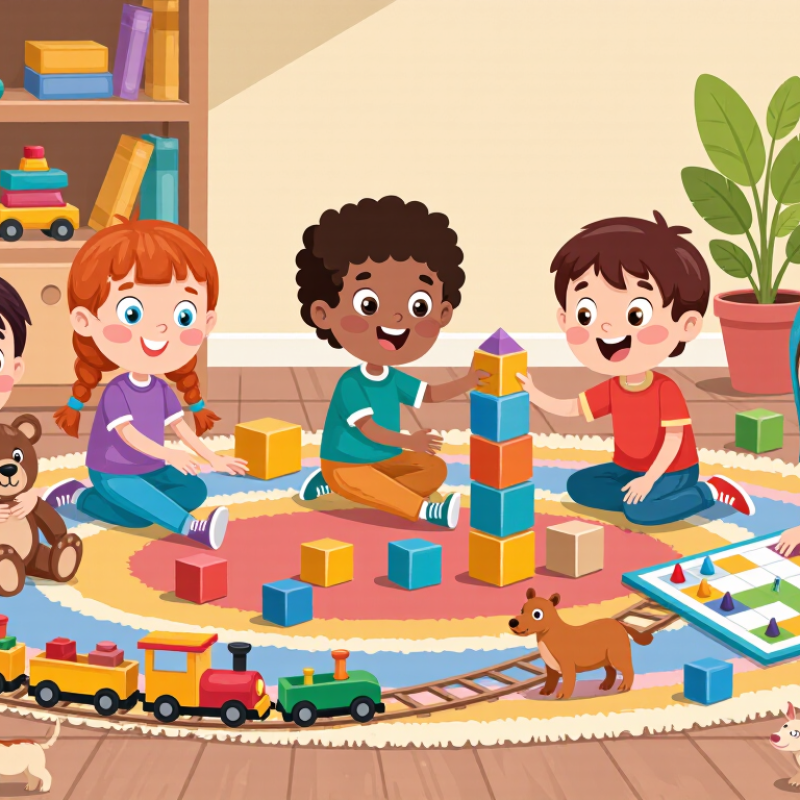
Emotional growth in childhood means learning to notice, name, express, and manage feelings. It also includes understanding that other people may feel differently. A child who says, “I am angry because the tower fell,” is practicing emotional awareness. This skill develops slowly through repeated experiences, not one perfect lesson. Feelings are information. Children also build empathy, patience, flexible thinking, and the ability to repair relationships after conflict.
Toys can create safe situations for this learning. During pretend play, a child may make a stuffed animal cry, offer it comfort, and invent a solution. That small scene can reflect real emotional work. Building blocks can bring frustration when a bridge collapses. Simple games can teach waiting, losing, negotiating, and trying again. Child-development professionals often observe these moments to understand how children handle stress and social choices. Caregivers can support growth by saying, “You look disappointed,” rather than demanding immediate calm.
Adults do not need to solve every feeling. Staying nearby may be more helpful. A quiet voice and clear limit can provide emotional safety. I sometimes expect children to explain feelings before they are ready, which can add pressure. A better approach is to offer words gently and accept silence. Some children need movement first. Others need a story, drawing, or repeated play before they can talk. Emotional growth is uneven, and progress may look very small: a child pauses, asks for help, or returns to play after crying.
Toys give children a safer language when spoken words feel difficult. A doll can become a worried child. A puppet may voice anger, fear, or loneliness. During pretend play, children rehearse conversations and test different emotional responses. The American Academy of Pediatrics describes play as essential for healthy social and emotional development in its 2018 clinical report. This matters because about one in seven adolescents worldwide experiences a mental health condition, according to the World Health Organization’s 2021 report.
In practice, open-ended toys often invite richer communication than toys with one fixed purpose. Building blocks can show a “too high” problem. Drawing materials can reveal changing moods through color and shape. A caregiver might ask, “What happened to the bear?” instead of demanding, “Why are you upset?” This keeps the child in control. It also creates space for listening. However, toys do not automatically create emotional growth. Some children reject pretend play. Others need repeated invitations. That is normal, and adults may need to reflect on their own impatience.
Tips: Choose toys with several possible uses. Name feelings without correcting them. Follow the child’s story. Pause before offering solutions. If a child repeatedly shows intense fear or isolation, consult a qualified child-health professional. UNICEF’s Learning through Play report also emphasizes guided play, where adults support learning without taking over. “Let the child lead” sounds simple. It is not always easy.
Pretend play gives children a safe rehearsal room for difficult feelings. A child may become a doctor, a frightened patient, or a lonely animal. Through these roles, children test ideas about fear, kindness, control, and repair.
“The bear is angry because nobody listened.”
That sentence can reveal more than a direct question.
The American Academy of Pediatrics described play as essential for healthy development in its 2018 clinical report. Its guidance connects imaginative play with language, self-regulation, and social understanding.
UNICEF’s 2019 “A World Ready to Learn” report found that about 69% of children aged three and four were developmentally on track globally.
However, development differed sharply across countries and family circumstances. Pretend play cannot erase those inequalities. It can still create small, meaningful opportunities for emotional practice.
Adults influence the quality of this play. Sitting nearby, an adult might ask,
“What does the puppet need now?”
Open questions encourage children to name motives instead of receiving adult answers. Children may also repeat aggressive or confusing scenes. That does not always mean something is wrong. It may be their unfinished attempt to understand conflict. Still, adults should watch patterns, offer calmer alternatives, and avoid forcing a confession. Pretend play is not magic. Sometimes, the child only wants the cardboard box to be a spaceship.
Children often use toys to practice feelings before they can explain them. A child may make two figures argue, then place one under a blanket. This small scene can express fear, anger, or a need for safety. During pretend play, children control the story, change the ending, and test different responses. That control supports emotional growth.
Play also develops self-regulation through repeated, manageable challenges. A child building a tower may pause after it falls, breathe, and try again. Simple games with waiting, turn-taking, or changing rules strengthen impulse control. Adults can quietly name the process: “You felt frustrated, then you slowed down.” Child development professionals often describe this support as co-regulation. The adult lends calm until the child can use it independently.
Coping skills grow when toys offer safe ways to rehearse real experiences. A stuffed animal can visit a doctor, lose a toy, or sleep alone. The child can practice comfort, problem-solving, and asking for help. I once assumed that useful play had to look peaceful. It does not. Loud battles and messy stories may still reveal important emotional work. However, toys cannot replace attentive adults. A caregiver should notice distress, avoid forcing a storyline, and allow the child to stop. Sometimes I speak too quickly and solve the problem for them. Waiting a little longer often shows what the child already knows.
How play builds self-regulation and coping skills
Play gives children repeated, low-pressure practice with naming feelings, waiting, sharing control, following rules, and recovering from frustration. These broad developmental windows are general guidance rather than clinical cutoffs; children develop at different rates.
Choosing toys for emotional growth requires more than bright colors or age labels. Look for open-ended toys that invite pretend play, turn-taking, and gentle problem-solving. A doll, puppet, or small figure can help a child act out fear, conflict, or comfort. Building materials can support patience when a tower falls.
The American Academy of Pediatrics advises choosing toys that encourage caregiver-child interaction, imagination, and problem-solving rather than passive entertainment.
Simple works well.
Screen-free choices also deserve attention. Common Sense Media’s 2020 Census reported that children aged eight and under averaged about 2 hours and 24 minutes of screen media daily. A toy that prompts conversation may create a useful emotional pause.
WHO guidelines recommend that young children receive at least 180 minutes of physical activity each day, including energetic play. Movement toys can support mood regulation, especially after long periods of sitting.
Watch how the child actually uses the toy. A pretend doctor kit may comfort one child but worry another. Avoid forcing “sharing” before a child can manage frustration. Sit nearby, name the feeling, and let the child choose the next step. That takes practice.
Adults may overestimate educational features and underestimate a soft animal carried everywhere. I sometimes think the best choice is the most expensive one, but observation often proves me wrong.
Check for durable materials, clear age guidance, and parts too large to swallow. A toy should challenge gently, not create repeated failure.
It means noticing, naming, expressing, and managing feelings. Children also learn that others may feel differently. Progress takes time.
Pretend play creates safe emotional practice. A child might comfort a crying stuffed animal or change a scary story’s ending.
Games teach waiting, turn-taking, losing, and trying again. After a tower falls, a child may pause, breathe, and rebuild.
Name the feeling gently, such as, “You look disappointed.” A calm voice and clear limit can feel safer than demanding immediate calm.
Not always. Staying nearby may help more than fixing everything. Waiting briefly can reveal what the child already understands.
Yes. Toy battles and complicated stories may express fear, anger, or a need for safety. Peaceful play is not the only useful kind.
A stuffed animal can visit a doctor, lose a toy, or sleep alone. These scenes rehearse comfort, problem-solving, and asking for help.
Offer simple words without pressure. Some children need movement, drawing, stories, or repeated play before talking. Silence can be meaningful.
A child may pause, request help, or return to play after crying. These changes look small, but they matter. I sometimes expect faster progress.
Emotional growth in childhood involves learning to recognize, express, and manage feelings while developing empathy, confidence, and healthy relationships. Why do toys help with emotional growth? Toys give children a safe and enjoyable way to explore emotions through hands-on experiences. Dolls, puppets, art materials, building sets, and sensory toys can encourage children to communicate thoughts they may not yet be able to explain with words. Through pretend play, children can act out everyday situations, take on different roles, and better understand how others might feel.
Play also helps children practice self-regulation and coping skills. Activities that require patience, problem-solving, or cooperation can teach children to handle frustration, wait for a turn, and recover from mistakes. Choosing toys that are open-ended, age-appropriate, and supportive of imagination allows children to play at their own pace while building emotional awareness, independence, and resilience.
