Trues Toys
Choosing toys from China can reduce costs without sacrificing quality, but price alone is a poor buying guide. How to pick affordable durable toys depends on materials, construction, testing, and supplier reliability. A low quotation may hide thin plastic, weak seams, or inconsistent production.
Experienced buyers usually begin with detailed product specifications. Check the plastic type, paint finish, moving parts, age guidance, and packaging strength. Ask suppliers for material declarations and relevant safety test reports. Independent laboratory verification adds confidence, especially for toys intended for young children. Reports should match the exact product, not a similar sample.
Start with samples.
Handle each toy like a child would. Twist the wheels, pull the handles, open the battery compartment, and drop the package from a practical height. Look for sharp edges, loose pieces, fading colors, and unpleasant odors. These simple checks reveal problems that photographs often conceal.
Supplier research matters equally. Review factory experience, production equipment, quality controls, and communication habits. A reliable manufacturer should explain tolerances, inspection points, and replacement procedures clearly. Third-party factory audits can provide useful evidence, although they cannot guarantee every shipment.
Cost calculations should include tooling, packaging, testing, freight, duties, and possible rework. A cheaper unit can become expensive after defects appear. Request a pre-shipment inspection with agreed acceptance standards. Keep records of samples, approvals, invoices, and corrective actions.
No process is perfect.
Even careful sourcing can miss a problem. That is why continuous inspections and honest supplier feedback remain essential. This guide explains practical ways to balance affordability, durability, safety, and dependable Chinese toy manufacturing.
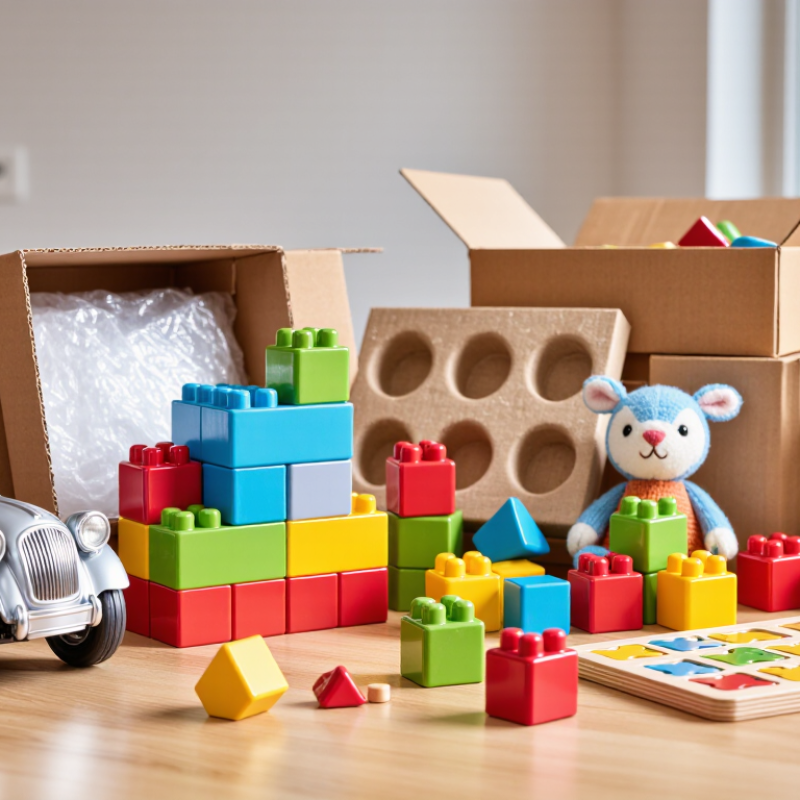
Affordable, durable toys from China begin with clear requirements. Define the child’s age, play setting, quantity, and expected product life. A toy for daily classroom use needs stronger joints than one used occasionally at home. Write down key details, such as size, material, colors, moving parts, and packaging needs. Set a realistic budget that includes sampling, testing, shipping, and possible design changes. A low unit price can become expensive after repeated defects.
Safety must guide every purchasing decision. Request material information, production samples, and test reports that match the finished toy. Check for sharp edges, loose parts, weak seams, choking hazards, and paint that could peel. Confirm that the supplier understands the safety requirements for your target market. Independent testing can provide stronger evidence than a supplier’s promise. In my experience, photos are useful, but they cannot reveal a brittle hinge or unpleasant odor. My first sample choice was attractive and cheap, yet it failed after limited use. That mistake changed my inspection process.
Tips: Compare at least three samples before ordering. Test hinges, wheels, handles, and fasteners repeatedly. Ask how defects are recorded and corrected. Keep written specifications for every approved detail. A small pilot order is often wiser than a large first shipment. Do not ignore minor flaws; they may signal inconsistent production. Recheck safety documents when materials or designs change.
Define toy needs, budget, durability, and safety requirements before comparing suppliers.
This practical planning model gives the highest priority to safety and product fit. For U.S.-bound toys, buyers should verify applicable requirements such as ASTM F963 testing, the 90 ppm lead limit for paint and surface coatings, the 100 ppm lead limit for accessible substrate materials, and the 0.1% limit for restricted phthalates in covered toys. The budget score is a planning weight, not a supplier quotation.
When sourcing affordable toys from China, material choice should guide the purchase, not just the quoted price. Look for clear information about plastics, wood, fabric, coatings, and fasteners. Food-grade claims alone prove little without supporting test reports. Ask for records covering heavy metals, phthalates, sharp edges, flammability, and age-related safety requirements. A reputable supplier should explain material grades and provide consistent samples.
Construction quality appears in small details. Check whether seams are tight, wheels turn smoothly, and joints resist gentle twisting. Pull handles, press buttons, and open every compartment several times. Weak toys often reveal loose parts, thin walls, rough edges, or uneven paint. Ask for production samples, not only polished photographs. Inspect several units because one perfect sample can hide inconsistent factory work.
I once focused too heavily on material labels. I missed a loose hinge during the first inspection. That mistake changed my process. Now I request drop tests, repeated-use testing, and carton evaluations before placing larger orders. A toy with a slightly higher unit price may last twice as long. Replacement rates, returns, and damaged shipments quickly erase small savings. Ask how long the product remains functional after repeated handling, washing, or outdoor exposure. Keep test records, sample approvals, and supplier responses in writing. Some factories may promise a lifespan without controlled evidence. Treat that promise carefully. Durability is measured, not assumed.
Comparing Chinese suppliers requires more than checking the lowest quotation. Request samples from at least three factories, then examine seams, joints, edges, paint coverage, and moving parts. A durable toy should survive repeated handling without loose pieces or sharp surfaces. Ask each supplier for material specifications, production capacity, defect rates, and quality-control procedures. Low prices can hide thinner plastic, weaker packaging, or inconsistent assembly.
Manufacturing experience matters, but factory age alone proves little. Ask for evidence of similar products, tooling records, inspection photos, and production samples from different batches. Confirm who controls the molds and whether quality staff inspect materials before assembly. For compliance, identify the destination market first. Relevant requirements may include EN 71, ASTM F963, or other applicable safety rules. Request complete test reports, not only certificate images. Check the laboratory’s accreditation, report dates, product model, materials, and tested colors. A report for one toy does not automatically cover another.
Tips: Compare suppliers in a simple table. Record unit price, minimum order quantity, testing costs, lead time, warranty terms, and replacement policies. Ask for a small trial order before committing to volume. Keep written specifications, because verbal promises can disappear. Also, do not assume a polished sample represents mass production. That mistake is common, and expensive. Recheck samples after packaging and transport tests. Safety documentation should be independently verified when uncertainty remains.
How to Pick Affordable Durable Toys from China
A low unit price does not always mean an affordable toy. Request a sample before comparing supplier quotes. Check the plastic feel, wheel strength, paint adhesion, and small-part security. A toy priced at $2.20 may need stronger packaging, raising the real cost by $0.35 per unit. Ask for material specifications and test reports from recognized laboratories. Do not rely on product photos alone.
Minimum order quantity affects both cash flow and risk. A supplier may offer a lower price at 3,000 pieces, but 500 units could be safer for a new product. Calculate the cost of unused inventory, storage, and possible design changes. Shipping also needs careful comparison. Sea freight is cheaper for large orders, while air freight may protect a seasonal launch. Request quotes using the same delivery terms, carton size, destination, and shipping date. Otherwise, the numbers are not comparable.
Hidden costs often appear after the purchase order. Include export packing, carton printing, inspection fees, customs duties, local delivery, insurance, and currency conversion charges. Confirm whether the quoted price includes individual boxes or only bulk cartons. A freight estimate can change when cartons are oversized. Delays can create another cost through missed sales or warehouse fees. Build a small contingency budget, perhaps 8% to 12%, but review it carefully. Even a detailed spreadsheet can miss something. I have seen “cheap” orders become expensive after one overlooked charge. Ask for a complete landed-cost worksheet before payment.
| Toy Category | Durability Indicators | Typical Factory Price (USD per Unit) |
Common MOQ | Sample Cost | Estimated Packed Weight | Typical Sea Freight Share (Per Unit) |
Typical Air Freight Share (Per Unit) |
Likely Hidden Costs | Best Use Case | Cost-Control Recommendation |
|---|---|---|---|---|---|---|---|---|---|---|
| ABS Construction Blocks | Thick molded pieces, tight connections, UV-stable color masterbatch, drop-tested parts | $1.20–$3.80 | 500–2,000 sets | $30–$80 plus freight | 0.35–0.90 kg per set | $0.10–$0.35 | $2.20–$5.80 | Mold charges, printed instruction sheets, individual cartons, safety testing, color matching | Educational sets and private-label starter collections | Use existing molds and limit the number of custom colors or printed parts. |
| Wooden Puzzles | Birch or rubberwood panels, smooth edges, water-based coating, strong piece fit | $1.10–$3.50 | 300–1,000 sets | $20–$60 plus freight | 0.20–0.55 kg per set | $0.08–$0.28 | $1.60–$4.20 | Artwork setup, coating compliance, carton inserts, wood-material documentation, inspection fees | Preschool learning products and gift sets | Choose standard shapes, shared packaging dimensions, and one or two coating colors. |
| Plush Animals | Dense stitching, reinforced seams, washable fabric, secure eyes or embroidered features | $2.20–$6.50 | 500–1,500 pieces | $40–$100 plus freight | 0.18–0.60 kg per piece | $0.12–$0.45 | $2.00–$6.50 | Pattern development, custom fabric color, hangtags, stuffing adjustment, testing for small parts | Retail gift products and seasonal collections | Select a standard body pattern and avoid oversized shapes that increase volumetric freight charges. |
| Magnetic Tiles | Thick plastic panels, fully enclosed magnets, ultrasonic or heat-sealed construction | $3.80–$9.50 | 500–1,000 sets | $50–$120 plus freight | 0.65–1.40 kg per set | $0.20–$0.70 | $4.50–$10.50 | Magnet safety testing, stronger packaging, mold maintenance, drop testing, instruction design | Higher-value construction and STEM products | Do not reduce magnet containment or wall thickness; save money through standard box sizes. |
| Die-Cast Vehicles | Zinc-alloy body, metal axle, tested wheel attachment, durable paint and tampo printing | $1.00–$3.20 | 1,000–5,000 pieces | $25–$70 plus freight | 0.08–0.22 kg per piece | $0.04–$0.16 | $0.80–$2.40 | Die-casting mold, paint approval, blister-card tooling, assembly, nickel or lead testing | Small impulse toys and vehicle assortments | Use a shared chassis and change only the top body or decoration where possible. |
| Silicone Bath Toys | Food-contact-grade silicone option, one-piece construction, sealed or easy-drain design | $0.90–$3.20 | 500–2,000 pieces | $25–$75 plus freight | 0.08–0.25 kg per piece | $0.05–$0.20 | $0.90–$2.80 | Silicone material certification, mold fee, drainage design, color matching, independent testing | Infant and toddler bath products | Use one-piece designs without glued components and order a single silicone color initially. |
| EVA Foam Play Mats | High-density foam, interlocking edges, low-odor material, anti-slip surface | $4.50–$12.00 | 300–1,000 sets | $60–$150 plus freight | 1.20–3.50 kg per set | $0.35–$1.10 | $8.00–$22.00 | Large-carton surcharge, compression packaging, material testing, printing plates, warehouse storage | Indoor play areas and early-learning environments | Compare freight by cubic meter, not only by unit price; bulky products can lose their price advantage. |
| Pretend-Play Kitchen Sets | Thick PP or ABS parts, rounded edges, reinforced hinges, stable accessory connections | $7.00–$22.00 | 300–1,000 sets | $80–$180 plus freight | 2.50–7.00 kg per set | $1.00–$3.80 | $18.00–$48.00 | Large-item packaging, assembly labor, mold amortization, pallet fees, destination delivery surcharge | Role-play centers and premium toy ranges | Request flat-pack packaging and confirm carton dimensions before approving the order. |
Cost figures are realistic planning ranges for small-to-medium production orders shipped from China. Factory prices generally exclude international freight, import duty, local taxes, certification, inspection, and destination delivery. Freight estimates assume consolidated commercial shipments and vary by route, season, carton volume, and Incoterms. Always request a current quotation and a pre-production sample before placing an order.
Choosing affordable durable toys from China starts with a sample, not a large purchase. A low price means little if the toy breaks after two days. I usually request several samples from the exact production version. Do not judge only from photos.
Check the sample by hand. Twist joints gently, pull stitched parts, press buttons repeatedly, and inspect sharp edges. Look for loose threads, weak seams, peeling paint, and unpleasant odors. Small detachable parts need special attention, especially for toys used by young children. Ask the supplier for material details, age guidance, and relevant safety test reports from an accredited laboratory. Documentation should match the actual sample, not an older model.
Test it in realistic conditions. Drop a soft toy from table height, wash it according to its care label, or operate an electronic feature for several hours. Record what happens. Keep photos, measurements, and written comments in one file.
I once focused too much on appearance and missed a weak wheel connection. That mistake cost time and shipping fees. A second sample may reveal changes that the first one hides.
Ask whether the supplier can keep the same materials, colors, dimensions, and packaging during mass production. Confirm acceptable defect limits in writing. If the sample fails, request a revised version and test it again. Cheap toys are only valuable when their quality remains consistent.ᱟ
Request samples from at least three factories. Inspect seams, joints, edges, paint, wheels, and moving parts. Compare material details, defect rates, production capacity, and inspection procedures. The lowest quote may hide weaker plastic or poor packaging.
No. Factory age alone proves little. Ask for similar product samples, tooling records, inspection photos, and batch evidence. Confirm who controls the molds. Experience helps, but proof matters more.
Identify the destination market before ordering. Request complete test reports from accredited laboratories. Check report dates, product models, materials, colors, and tested versions. One report may not cover every toy.
Include the unit price, packaging, testing, shipping, duties, insurance, and local delivery. Also count storage and currency conversion charges. A $2.20 toy may need $0.35 extra packaging. Cheap is not always cheap.
A small trial order can reduce financial risk. For example, 500 units may be safer than 3,000 units. Consider unused inventory, storage space, and possible design changes. Large orders can create expensive leftovers.
Use identical delivery terms, carton sizes, destinations, and shipping dates. Sea freight often suits larger orders. Air freight may suit seasonal launches. Oversized cartons can change the final freight cost.
Twist joints gently and press buttons repeatedly. Pull stitched parts and inspect loose threads. Check sharp edges, peeling paint, odors, and detachable parts. Try realistic tests, such as table-height drops or washing.
Record the approved materials, colors, dimensions, packaging, and defect limits in writing. Request samples from the exact production version. Test another sample after packaging and transport. I once trusted appearance and missed a weak wheel connection. That was costly.
How to pick affordable durable toys begins with clearly defining your target age group, play purpose, preferred materials, budget, and safety expectations. Choose toys made from sturdy, non-toxic materials with smooth edges, secure parts, reliable construction, and designs that can withstand repeated use. Consider the product’s expected lifespan rather than focusing only on the lowest purchase price.
When comparing Chinese suppliers, review their manufacturing experience, quality-control procedures, certifications, communication, and ability to provide consistent production. Evaluate unit prices together with minimum order quantities, packaging, shipping, customs, inspection fees, and other possible hidden costs. Before placing a large order, request samples and test them for durability, functionality, appearance, and packaging quality. Clear specifications, written agreements, and careful sample approval can help reduce risks and ensure that affordable toys remain safe, dependable, and suitable for long-term use.
