Trues Toys
Choosing outdoor toys for children is not simply about bright colors or impressive features. The best choice should match a child’s age, physical abilities, interests, and play space. A small courtyard needs different equipment from a large garden. Before buying, measure the available area and inspect the ground for stones, sharp edges, or slippery surfaces.
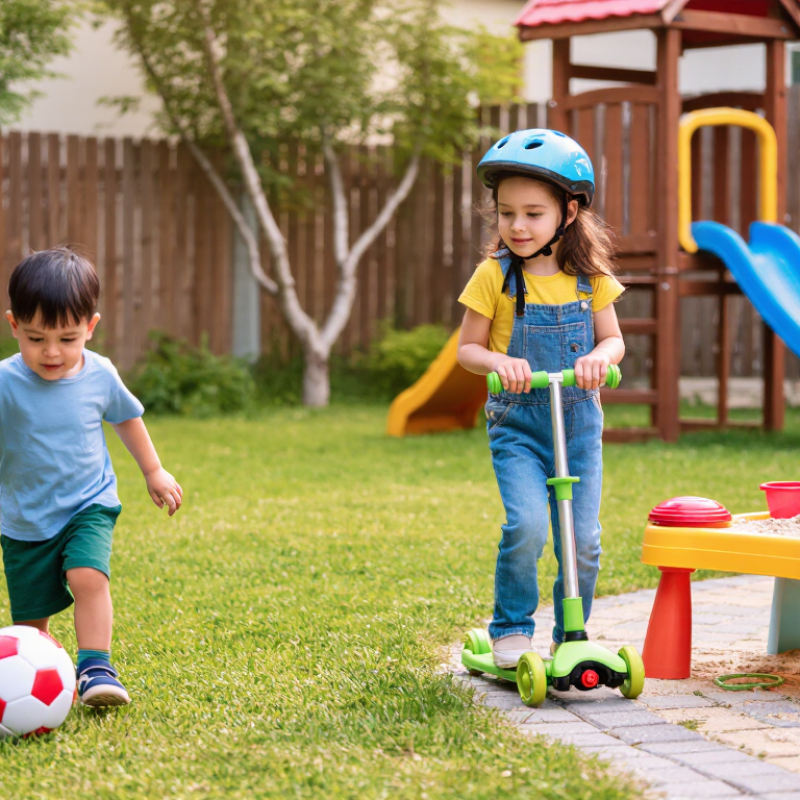
So, what toys are best for outdoor play? Safe, open-ended toys often provide lasting value. Balls support running, throwing, and coordination. Scooters encourage balance, but they require suitable helmets and clear pathways. Sand and water tables invite creative play, while climbing equipment can develop strength and confidence. Always check weight limits, stable construction, smooth surfaces, and weather-resistant materials. Follow the manufacturer’s age guidance carefully.
Real-world use can reveal details that product photos hide. A toy may look perfect online but become awkward in a narrow yard. A large playhouse may offer excitement, yet children might use a simple bucket more often. That is worth remembering. Children’s preferences change, and no toy guarantees constant engagement. Parents and caregivers should observe how children play, not just what advertisements promise. Active supervision remains important, especially near water, heights, roads, or shared outdoor spaces. Regularly inspect toys for cracks, loose screws, fading plastic, and trapped moisture. A thoughtful choice combines safety, durability, movement, and imagination. It also leaves room for children to create their own games. Sometimes, the simplest toy works best.
How to Choose the Best Outdoor Toys for Kids?
Understanding a child’s age and development makes outdoor toy selection more practical. Children need different challenges as their balance, strength, language, and social skills change. For toddlers aged one to three, choose large balls, push toys, water tables, and low climbing structures. These encourage walking, grasping, and simple problem-solving. Avoid small detachable parts and unstable platforms. Keep the play area visible. At this age, repetition matters. Watch, then adjust.
Children aged four to six often enjoy ride-on toys, sand tools, stepping stones, and simple throwing games. These activities build coordination while introducing turn-taking. A child who throws a ball toward a bucket practices aim without feeling tested. For children aged seven to nine, consider jump ropes, scooters, beginner sports equipment, and construction-based outdoor games. Clear rules help, but children also need room to invent their own games.
Older children may prefer climbing nets, bicycles, garden projects, or cooperative challenges. Select equipment that matches their current ability, not their future skill. I once chose a climbing activity that looked exciting but was too difficult, and the child quickly lost interest. That mistake reminded me to observe frustration, confidence, and attention span. Check for smooth edges, strong fasteners, suitable heights, and weather-resistant materials. Adult supervision should change with the activity, even when children appear experienced. A good toy invites movement, manageable risk, and repeated discovery.
Choosing outdoor toys begins with safety, not bright colors. Check the recommended age range and inspect every edge, joint, and opening. Small gaps can trap fingers, while loose parts may become choking hazards. Select toys made from tested, child-safe materials, and follow recognized safety standards in your region. A stable base matters, especially on grass or uneven paving.
Durability shows through construction details. Thick plastic should feel firm rather than brittle, and wooden parts need smooth surfaces without splinters. Look for strong handles, secure fasteners, and replacement parts when available. I once underestimated how quickly repeated climbing could loosen a connection. Now, I gently shake larger toys before every use and tighten screws when needed. This habit takes less than a minute.
Weather resistance deserves close attention. Sunlight can fade colors and weaken some plastics, while rain can swell untreated wood or create slippery surfaces. Choose UV-resistant materials, rust-resistant hardware, and designs that drain water easily. After a storm, dry toys before storage and check for cracks, mold, or sharp edges. A covered storage box helps, but it cannot repair poor construction. Some products claim outdoor readiness without explaining their testing, and that should make buyers pause.
Evaluating Safety, Durability, and Weather Resistance
Scores are relative suitability ratings from 0 to 10 based on common material characteristics. Safety depends on design, rounded edges, stability, correct installation, age suitability, and adult supervision. Weather resistance improves when products are protected from prolonged moisture, sunlight, and freezing conditions.
How to Choose the Best Outdoor Toys for Kids?
Matching toys to outdoor space, activities, and available supervision makes play safer and more engaging. A small balcony needs compact options, such as soft balls, chalk, or balance games. A large yard can support climbing, throwing, digging, and cooperative activities. Measure the play area first. Leave clear paths around every moving toy.
The Centers for Disease Control and Prevention recommends at least 60 minutes of daily physical activity for children aged 6–17. Choose toys that encourage repeated movement, not just brief excitement. A target, stepping path, or ride-on toy can build coordination through simple challenges. The U.S. Consumer Product Safety Commission’s 2023 Playground Equipment Injury Study estimated 155,400 emergency-department-treated injuries involving playground equipment among children under 14 in 2022. Check stability, age guidance, surface conditions, and pinch points before play. These details matter more than attractive colors.
Supervision should shape the purchase. If an adult can stay nearby, children may use toys requiring turn-taking or basic problem-solving. When supervision is limited, choose simpler toys with fewer moving parts and better visibility. I once underestimated how quickly a “quiet” water game became slippery. That mistake changed my checklist. Still, no checklist is perfect. Children invent new risks. Reassess the space after rain, strong wind, or changes in the child’s confidence. The American Academy of Pediatrics also advises active supervision and developmentally appropriate equipment, not merely age labels. A toy should fit the child, the space, and the adult’s real availability.
| Toy Type | Typical Age Range | Recommended Outdoor Space | Main Activity | Typical Setup or Footprint | Recommended Supervision | Best For | Key Safety Considerations |
|---|---|---|---|---|---|---|---|
| Sidewalk Chalk | 3 years and up | Small Driveway, patio, or paved walkway |
Creative drawing, games, and early writing practice | Requires only a dry, reasonably smooth surface; chalk can be stored in a small container | Nearby | Creative play in compact outdoor areas | Use non-toxic chalk; avoid roads, steep slopes, and areas where chalk dust may irritate eyes or breathing. |
| Bubbles | 3 years and up | Small Patio, balcony garden, or lawn |
Chasing, reaching, and hand-eye coordination | A small clear area is sufficient; choose a location away from stairs and traffic | Nearby | Short active-play sessions and younger children | Do not allow children to drink bubble solution; wipe slippery spills from hard surfaces. |
| Sandbox or Sand Table | 2 years and up | Small to Medium Patio, deck, or shaded garden area |
Scooping, pouring, building, and sensory play | Usually needs about 1.5–2.5 m² of usable play and access space | Nearby | Open-ended play with limited running space | Use clean play sand, cover the container when not in use, and check for sharp tools or debris. |
| Water Table | 2 years and up | Small to Medium Flat patio or shaded outdoor area |
Sensory exploration, pouring, and cooperative play | Needs a stable, level surface and enough room for children to stand around it | Active | Warm-weather play and sensory learning | Young children require close supervision around water; empty and clean the table after use. |
| Scooter | 5 years and up, depending on the model and child’s ability | Medium to Large Flat, smooth, traffic-free path |
Balance, coordination, steering, and physical exercise | Needs a clear route with stopping space; outdoor paths should be free from cars and obstacles | Nearby | Children who enjoy movement and skill progression | Use a properly fitted helmet and protective gear; avoid wet, uneven, or sloped surfaces. |
| Balance Bike | 2–5 years, depending on development and product design | Medium Flat lawn, paved path, or quiet play area |
Balance, steering, and preparation for pedal-bike skills | Requires a clear riding area with enough room for gradual stops and turns | Nearby | Developing gross-motor skills without pedals | Use a helmet; keep children away from roads, pools, driveways, and steep drops. |
| Tricycle or Pedal Ride-On | 2–5 years, depending on size and design | Medium Flat, enclosed path or paved play area |
Pedaling, steering, leg strength, and spatial awareness | Needs a smooth route wide enough for turning and an obstacle-free stopping zone | Nearby | Structured riding practice in a contained area | Check that the child’s feet can reach the pedals or ground as appropriate; avoid streets and steep slopes. |
| Ball Set | 3 years and up | Medium Lawn, courtyard, or open paved area |
Throwing, catching, kicking, and group games | Needs open space appropriate to the ball size and children’s throwing ability | Periodic | Active play with siblings or friends | Use age-appropriate ball sizes; keep play away from windows, roads, and other hazards. |
| Kite | 6 years and up | Large Open field with reliable wind |
Running, coordination, and basic wind awareness | Requires a broad open area with no overhead wires, trees, roads, or nearby water | Nearby | Outdoor exploration in spacious locations | Never fly near power lines, roads, airports, or storms; use ordinary kite string rather than conductive wire. |
| Portable Soccer Goal | 5 years and up | Large Open lawn or sports area |
Kicking, shooting, running, and team play | Needs a level playing area and sufficient clearance behind and beside the goal | Periodic | Group play and regular physical activity | Anchor the goal securely, inspect the frame, and keep players clear of unstable or damaged equipment. |
| Climbing Dome or Play Structure | 5 years and up, according to the structure’s specifications | Large Level area with a protective fall zone |
Climbing, strength, balance, and imaginative play | Requires a permanent or secured footprint plus clear space around the structure | Active | Children seeking challenging physical play | Install on an appropriate impact-absorbing surface; check fasteners, height limits, and fall zones regularly. |
| Jump Rope | 5 years and up | Medium Flat, dry surface with overhead clearance |
Rhythm, coordination, cardiovascular exercise, and games | Requires enough space for the rope to rotate without contacting people or objects | Periodic | Active solo play or small-group games | Use a suitable rope length and a non-slippery surface; maintain separation between players. |
Selection note: Choose equipment that matches the child’s age, abilities, body size, and the manufacturer’s instructions. Outdoor conditions, equipment condition, and the level of adult supervision can change the appropriate choice.
Comparing Materials, Features, Maintenance, and Environmental Impact
Outdoor toys should match a child’s age, strength, and play space. I have found that sturdy materials matter more than bright colors. Smooth, sealed wood feels warm, but it needs regular checks for splinters and moisture damage. Durable plastic resists rain, although some types become brittle after years of strong sunlight. Powder-coated metal can support active play, but exposed edges and hot surfaces require careful inspection.
Useful features should encourage movement without creating unnecessary risks. Look for stable bases, rounded corners, secure fasteners, and drainage holes that prevent trapped water. Adjustable parts can extend a toy’s usefulness as children grow. Small gaps deserve attention. Fingers can get caught there. I once overlooked a loose connector during a routine check, so now I test every joint by hand before play.
Maintenance affects both safety and cost. Wash surfaces with mild soap, dry them fully, and store removable pieces under cover. Follow the maker’s care instructions, but do not trust labels blindly. Environmental impact also deserves honest questions. Choose repairable designs, replaceable parts, recycled materials, and packaging with less waste. A recyclable toy is not automatically sustainable if it breaks after one season. Local recycling rules vary, and mixed materials may be difficult to process. Sometimes buying fewer, better-used toys is the less exciting choice.
Choosing outdoor toys should begin with movement, not appearance. The World Health Organization recommends at least 60 minutes of moderate-to-vigorous activity daily for children aged 5–17. A toy that encourages running, balancing, throwing, or climbing can support that target naturally.
Look for adjustable balls, stepping stones, garden tools, or simple obstacle pieces. Children should be able to change the game themselves. That flexibility matters.
The Outdoor Foundation’s 2024 Outdoor Participation Trends Report recorded 57.8 million young participants aged 6–17 in outdoor recreation.
This figure suggests strong interest, but participation does not happen automatically. Choose toys that invite two or more children to cooperate, negotiate rules, and solve small problems together.
A fabric tunnel can become a cave, a racetrack, or a rescue station. Open-ended play is often more valuable than a toy with one fixed function.
Creative play needs room for mistakes. Mud gets everywhere. Games may become noisy or uneven. That is normal.
I once chose a complicated outdoor set that looked impressive, but children ignored it after ten minutes. Simple equipment worked better because they could invent new challenges.
Check materials, weight, grip, and age guidance before buying. Also consider shade, soft ground, and adult supervision, especially near water or hard surfaces. The best choice is not always the most expensive one.
Check the age range, edges, joints, openings, and loose parts. Small gaps may trap fingers. Choose tested, child-safe materials.
Grass and uneven paving can make toys wobble. A wide, stable base lowers tipping risks during climbing or active play.
Firm plastic should not feel brittle. Wooden surfaces should feel smooth, without splinters. Strong handles and secure fasteners also matter.
Yes. Gently shake larger toys and check for loosened connections. Tighten screws when needed. It takes less than a minute.
Sunlight may fade colors and weaken plastic. Rain can swell untreated wood or create slippery surfaces. Weather leaves clues.
Look for UV-resistant materials, rust-resistant hardware, and drainage-friendly designs. Dry toys after storms. Check for cracks, mold, and sharp edges.
Choose toys involving running, balancing, throwing, or climbing. Balls, stepping stones, garden tools, and obstacle pieces can work well.
Choose flexible toys for two or more children. A fabric tunnel might become a cave, racetrack, or rescue station. Simple is sometimes better.
Not always. Children may ignore complicated equipment after ten minutes. I have made that mistake. Open-ended toys often create longer-lasting games.
Consider shade, soft ground, water, and nearby hard surfaces. Supervise when needed. Mud and noise are normal, though not always convenient.
Choosing the right outdoor toys begins with understanding a child’s age, abilities, interests, and stage of development. What toys are best for outdoor play depends on whether children need opportunities to improve balance, coordination, strength, imagination, or social skills. Parents should also consider safety features, stable construction, non-toxic materials, weather resistance, and durability. Toys should be suitable for the available outdoor space, from a small yard or balcony to a larger garden, and matched with the level of adult supervision possible.
It is also helpful to compare materials, moving parts, storage needs, cleaning requirements, and long-term maintenance before making a decision. Environmentally responsible choices may include durable products that last longer, use fewer harmful materials, or can be repaired and reused. The best outdoor toys encourage active movement, teamwork, creative exploration, and independent play while remaining comfortable and age-appropriate. By balancing enjoyment, safety, practicality, and sustainability, families can choose toys that provide meaningful outdoor experiences in different seasons and settings.