Trues Toys Trues Toys

China Top Toys What Makes a Toy Good for Learning?

Time:2026-05-07 Author:Charlotte
0%

In the world of children’s play, the question arises: "What makes a toy good for learning?" Experts believe that effective toys engage kids' minds and encourage creativity. Dr. Emily Chang, a child development specialist, states, "A great educational toy inspires curiosity and critical thinking." This insight shapes how we view learning through play.

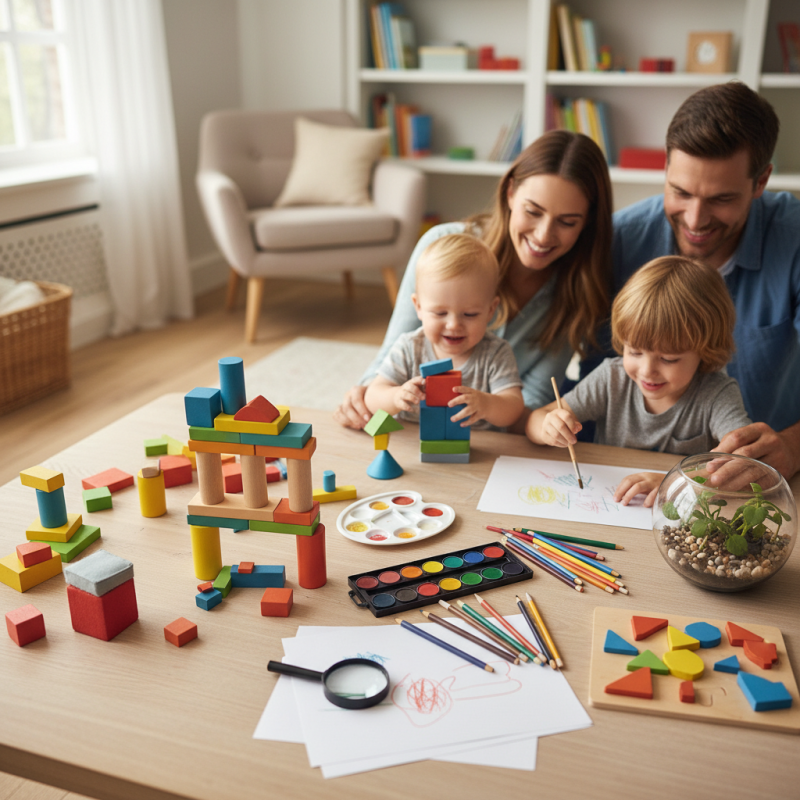
Toys should foster exploration and problem-solving. They need to challenge children without causing frustration. Blocks, for instance, can teach spatial awareness and engineering. Art supplies boost creativity and self-expression. However, not all toys achieve these goals. Some are overly simplistic, leaving little room for imagination.

Moreover, parents often struggle to decipher what truly aids learning. Many buy trendy toys that may not help. It's essential to consider developmental stages. A toy that nurtures a toddler's skills might overwhelm an older child. Reflecting on this, we find that effective learning tools require thoughtful selection.
China Top Toys What Makes a Toy Good for Learning?

Importance of Educational Toys in Child Development

Educational toys play a crucial role in childhood development. They encourage creativity and critical thinking in young minds. Research from the American Academy of Pediatrics indicates that play promotes brain development and enhances problem-solving skills. It’s estimated that about 90% of a child's brain develops by age five, underscoring the importance of toys during these formative years.

Toys that stimulate cognitive skills often combine fun with learning. For instance, puzzles and building blocks can enhance spatial awareness and hand-eye coordination. Reports indicate that children who engage with educational toys often show a 30% increase in memory retention compared to those who do not. However, parents must select toys carefully. Some toys may lack educational value or even encourage passive play, leading to less engagement.

The impact of educational toys extends beyond academics. Social skills and emotional intelligence also improve. Kids learn to share, collaborate, and adapt their play. A study from the National Institute for Play emphasizes that interactive toys can significantly enhance social interactions. However, while toys can aid development, not every toy is effective. It’s essential to assess each option critically, as the wrong choice can hinder learning instead of promoting it.

China Top Toys: What Makes a Toy Good for Learning? - Importance of Educational Toys in Child Development

Toy Type Learning Benefit Recommended Age Key Features
Building Blocks Enhances spatial awareness and fine motor skills 3-6 years Variety of shapes, encourages creativity
Puzzles Improves problem-solving skills and cognitive abilities 4-8 years Different difficulty levels, reinforces shapes and colors
Art Supplies Promotes creativity and self-expression 2-10 years Variety of colors and tools, encourages imaginative play
STEM Kits Fosters interest in science, technology, engineering, and math 6-12 years Hands-on experiments, encourages critical thinking
Board Games Develops social skills and strategic thinking 5-12 years Team play, teaches rules and patience

Characteristics of Effective Learning Toys for Children

When considering effective learning toys for children, several key characteristics stand out. A good learning toy should engage a child's curiosity and imagination. Toys that promote hands-on interaction can spark creativity and critical thinking. For instance, building blocks allow children to explore spatial relationships while fostering problem-solving skills. The tactile experience encourages children to experiment and innovate.

Another important aspect is age-appropriateness. Toys should challenge children without causing frustration. If a toy is too advanced, it may lead to discouragement. Conversely, if it’s too simple, it might not hold their interest. A balance is crucial. Toys with varying difficulty levels can cater to a range of developmental stages. Parents should observe how children interact with toys to assess their learning progress.

Moreover, effective learning toys often encourage social interaction. Board games or collaborative puzzles prompt teamwork and communication. Children can learn to share and negotiate while having fun. Observing their interactions can provide insights into their social skills. However, not all toys encourage these positive outcomes. Some may lead to isolation or frustration. A thoughtful selection process can enhance the learning experience significantly.

Popular Top Toys in China and Their Educational Value

In today's market, toys play a crucial role in children's development. Popular toys in China often combine fun and educational value. According to a report by The NPD Group, 70% of parents prioritize educational benefits when choosing toys. This trend reflects a growing awareness of developmental support through play.

STEM toys, for example, encourage critical thinking and creativity. Recent studies indicate that children exposed to these toys show improved problem-solving skills. They engage young minds by promoting hands-on learning through building and experimentation. However, some toys labeled as "educational" may not fulfill these promises. Understanding what truly enhances learning is vital for parents.

Despite various options, the market can be overwhelming. Many toys lack sufficient educational content and can lead to superficial play experiences. Parents must sift through a plethora of choices and focus on those that genuinely support skill development. Encouraging interactive and collaborative play can further enhance learning outcomes. Not all toys deliver; reflection on their impact is essential.

Methods to Evaluate the Learning Potential of Toys

Evaluating the learning potential of toys involves various methods and criteria. Educators and psychologists emphasize the importance of developmental alignment. A toy should match a child’s cognitive and emotional stages. For instance, toys that promote problem-solving and creativity can significantly enhance learning outcomes. According to a recent report by the Toy Association, toys that encourage constructive play can improve spatial reasoning skills by up to 30%.

Moreover, the intention behind toy design is crucial. Interactive toys that engage multiple senses help retain attention better. For example, tactile toys can enhance fine motor skills while fostering sensory exploration. Research from the Journal of Child Development indicates that multi-sensory experiences can boost information retention in children. However, not all toys succeed in this regard. Some toys lack the necessary complexity to promote genuine engagement.

Another method of evaluation examines the social interactions toys facilitate. Toys that encourage cooperative play support the development of social skills. A toy that leads to conflict or isolation could hinder collaboration. According to studies, 60% of children benefit from teamwork scenarios provided by well-designed toys. Yet, some toys fall short in encouraging group activities. This highlights a vital gap in toy design that needs addressing for better educational outcomes.

Trends Influencing the Design of Educational Toys in China

In recent years, the trend of designing educational toys in China has taken a significant turn. Designers are focusing on integrating technology into toys. This fosters interaction and learning. Simple wooden blocks are evolving into smart learning tools. Children now learn coding through play. This change makes the learning process engaging and fun.

Another trend is sustainability. Parents are becoming more environmentally conscious. They prefer toys made from safe, non-toxic materials. This has led companies to rethink their manufacturing processes. Many are now using recycled materials. Educators emphasize the importance of tactile experience. Toys must stimulate multiple senses for effective learning.

Tips: Choose toys that promote creativity. Look for those that encourage problem-solving skills. Balance screen time with hands-on activities to enhance learning.

FAQS

: Why are educational toys important in child development?

: They foster creativity and critical thinking, promoting brain development in early childhood.

How do educational toys enhance memory retention?

Children engaging with educational toys can show a 30% increase in memory retention compared to those who don’t.

What types of skills do effective learning toys promote?

They stimulate cognitive skills, improving spatial awareness, hand-eye coordination, and problem-solving abilities.

What characteristics should parents look for in learning toys?

Toys should engage curiosity, be age-appropriate, and encourage hands-on interaction without causing frustration.

How can toys impact social skills in children?

Interactive toys can improve sharing, collaboration, and social interactions among children during play.

What methods can evaluate a toy's learning potential?

Assess developmental alignment, the intention behind the design, and the social interactions the toy encourages.

What happens if a toy is too advanced or simple for a child?

An advanced toy can cause frustration, while a simple one may fail to hold their interest.

How can cooperative play with toys benefit children?

Toys that encourage teamwork support social skills, though some may lead to conflict or isolation.

Are all educational toys effective?

Not every toy promotes engagement; some may lack educational value or hinder learning instead.

What role do multi-sensory experiences play in toy effectiveness?

Toys that engage multiple senses can improve attention and information retention in children.

Conclusion

The article titled "China Top Toys: What Makes a Toy Good for Learning?" delves into the significance of educational toys in child development. It highlights how effective learning toys should not only engage children but also foster critical thinking, creativity, and problem-solving skills. Characteristics such as versatility, safety, and age appropriateness are essential when evaluating what makes a toy good for learning.

Additionally, the article explores popular toys in China that offer substantial educational value, illustrating their roles in skill development. Methods to assess the learning potential of toys are discussed, alongside current trends shaping the design of educational toys in the country. By emphasizing these aspects, the article provides insights into how thoughtfully designed toys can significantly impact a child's growth and learning journey.

Charlotte

Charlotte

Charlotte is a seasoned marketing professional with a deep understanding of the company's portfolio and a passion for elevating its presence in the market. With a keen eye for detail and a commitment to excellence, she ensures that our professional blog is regularly updated with insightful articles......