Trues Toys Trues Toys

What Is the Best Way to Reduce Toy Clutter at Home?

Time:2026-10-24 Author:Ethan
0%

Toy clutter can make a peaceful room feel crowded within minutes. Blocks spill from baskets, dolls gather under chairs, and puzzle pieces disappear beneath the sofa. Learning How to reduce toy clutter at home is not about removing every toy. It is about creating a space children can use, clean, and enjoy.

A practical system begins with observation. Notice which toys children actually choose during an ordinary week. Keep favorites within reach, using open bins with simple labels. Store similar items together, such as wooden animals, dress-up clothes, and building bricks. Child development professionals often support accessible storage because it encourages independent play and easier cleanup. Still, every household works differently.

I have found that smaller collections usually feel calmer, but reducing too quickly can cause resistance. A child may ignore a toy for weeks, then suddenly need it for imaginative play. Consider a temporary “pause box” instead of an immediate donation bag. Date the box and review it after one or two months. If nobody asks for those toys, the decision becomes clearer. It is not a perfect method. Some families need more storage, while others need firmer limits. The goal is a flexible routine, not a showroom. This guide explores realistic sorting, rotating, storing, and maintenance strategies for busy homes.
What Is the Best Way to Reduce Toy Clutter at Home?

Understanding the Causes and Effects of Toy Clutter

What Is the Best Way to Reduce Toy Clutter at Home?

Toy clutter often begins with good intentions. Adults buy gifts, replace lost pieces, and keep toys for future stages. Children also receive items from relatives, classrooms, and celebrations. The result can exceed the space and attention available at home. In my experience, clutter grows fastest when every toy stays accessible. The floor shows it. Children may struggle to choose, abandon activities quickly, or argue over missing parts.

The causes deserve attention before any cleaning begins. Watch the play area for one week, and note which toys are used, ignored, or repeatedly misplaced. A child-development-informed approach suggests matching access to age, interest, and attention span. Too many visible choices can create distraction, although every child responds differently. Some children need variety. Others play longer with five familiar objects. That pattern matters. Parents should also examine their habits, including impulse purchases and guilt about removing gifts.

A practical reduction method starts with categories: daily favorites, occasional toys, incomplete sets, and items no longer suitable. Keep a small selection within reach, then rotate the rest every few weeks. Store puzzles with their pieces, and use clear labels where children can help return items. Involving children builds ownership, but it may also slow the process. I still miss the mark by keeping “maybe” toys for sentimental reasons. A trial box can test those decisions without immediate disposal. If a toy repeatedly causes frustration, noise, or conflict, its cost may be emotional rather than financial.

Assessing Toys and Deciding What to Keep

I begin with one room and one category, such as puzzles or building toys. Empty a shelf onto the floor, then inspect each item carefully. I ask whether the toy is safe, complete, age-appropriate, and used often. A broken piece, sharp edge, or loose battery cover needs immediate removal. Sentimental value matters too, but it should not control every decision.

A toy earns its place when it supports regular play, creativity, movement, or social interaction. I watch my child play for several days instead of trusting a quick opinion. Unused does not always mean unwanted. Some toys need time. I keep favorites in an open basket and store occasional toys in a labeled box. This makes choices visible without making the room feel empty.

Duplicates deserve a practical test. If three similar vehicles create arguments, I keep the two that receive real attention. If a complete game has missing pieces, I check whether it can still be played safely. Otherwise, I set it aside for responsible reuse or recycling. My system is not perfect. I sometimes keep gifts that nobody touches. That hesitation shows me where emotions, not usefulness, are guiding the shelf.

What Is the Best Way to Reduce Toy Clutter at Home? - Assessing Toys and Deciding What to Keep
Toy Category Typical Items in the Home Quantity Use Frequency Condition Primary Assessment Decision Next Action
Building Toys Interlocking blocks and construction pieces 1 large set Several times per week Complete and clean Encourages open-ended play, planning, and fine-motor skills. Keep Store in one labeled container.
Puzzles Floor and tabletop puzzles 8 Once or twice per month 6 complete; 2 missing pieces Keep the complete puzzles that match the child’s current ability. Keep 6 Recycle 2
Pretend Play Play kitchen utensils and food pieces 34 pieces Weekly Good, with duplicates Supports language, social play, and imagination, but too many similar pieces reduce usability. Keep selected items Remove duplicates.
Vehicles Small cars, trucks, and trains 22 Daily 18 usable; 4 damaged Frequently used and easy to combine with building or pretend play. Keep 18 Recycle 4
Stuffed Animals Plush animals and comfort toys 15 3 used regularly Most clean; several unused Keep favorites and comfort items; excess toys take up storage space. Keep 5
Arts and Crafts Paper, crayons, washable markers, and paints 1 supply box Weekly Some dried-out supplies Useful for creative play when supplies are visible, complete, and safe to use. Keep usable supplies Discard dried items.
Outdoor Toys Balls, sidewalk chalk, and sand tools 19 Several times per week 15 usable; 4 cracked Supports physical activity and outdoor play, but broken plastic should not remain available. Keep 15 Recycle or discard 4.
Board Games Family games and simple card games 7 Monthly 5 complete; 2 incomplete Keep games that suit the child’s age and are realistically played by the household. Keep 5
Electronic Toys Sound, light, and battery-operated toys 9 Rarely used 2 without batteries; 1 malfunctioning Low use and high maintenance make these less valuable than toys used for open-ended play. Recycle 6 appropriately.
Books Picture books and early readers 31 Daily 28 good; 3 torn Frequently used books support language development and independent reading routines. Keep 28 Recycle 3 if unrepairable.
Dress-Up Items Hats, capes, costumes, and accessories 16 Every few weeks 12 usable; 4 outgrown Useful for imaginative play when items fit and can be put away easily. Keep 12
Baby Toys Teethers, rattles, and infant activity toys 14 Not currently used 10 clean; 4 worn or cracked Keep only safe items if a younger child will use them; inspect for damage before storage. Review 10 Discard 4 damaged items.
Musical Toys Small drums, shakers, and keyboards 6 Weekly 5 functional; 1 broken Supports rhythm and sensory exploration, but broken parts may create safety concerns. Keep 5 Discard 1.
Collectible Figures Small character figures and accessories 27 Occasionally 24 usable; 3 missing small parts Keep figures that are actively included in play; loose duplicates contribute to visual clutter. Keep 18
Water and Bath Toys Floating toys and bath cups 11 Several times per week 8 clean; 3 with mold or trapped water Bath toys need regular drying and inspection because trapped moisture can support mold growth. Keep 8 Discard 3 safely.
A practical keep rule is to retain toys that are safe, complete, age-appropriate, used regularly, or valuable for open-ended play. Place uncertain items in a dated review box and reassess them after 30 days.

Sorting Toys by Use, Condition, and Ownership

What Is the Best Way to Reduce Toy Clutter at Home?

Sorting Toys by Use, Condition, and Ownership

Toy clutter grows quietly, especially near beds, sofas, and dining tables. A useful reset begins with three questions: Is it used, is it safe, and who owns it?

Place every toy in a clear sorting area. Keep daily favorites within easy reach. Store occasional toys in labeled boxes. Put broken toys aside for repair, but set a firm decision date. If the repair never happens, the toy may need to leave.

Check each item for cracks, loose parts, sharp edges, and missing pieces. Damaged toys can create frustration before they create danger. Clean washable toys and inspect fabric items for stains or odors. A toy in good condition still may not deserve space if nobody chooses it.

Ownership matters more than many families expect. Ask children which toys belong to them, which are shared, and which should return to another room. This builds responsibility without turning cleanup into punishment. I once kept a large basket of “special” toys for months. The children rarely touched them, yet I protected the basket. That was my mistake.

Use a small rotation box for toys that are useful but currently ignored. Review it every few weeks. Keep the process flexible. Children’s interests change, and a carefully planned system may fail during busy seasons. The goal is not a perfect room. It is a home where toys can be found, used, and cared for.

What Is the Best Way to Reduce Toy Clutter at Home?

Sort toys by how often they are used, their condition, and who owns them.

Start with toys that are used frequently and in good condition. Store seasonal or occasionally used toys separately, repair items that are still valuable, and donate duplicates or toys that are no longer owned or used. Dispose of broken items that cannot be safely repaired or reused.

Creating Practical Storage Zones for Toys

Reducing toy clutter works better when storage zones match real family routines. The UCLA Center on Everyday Lives of Families studied 32 households and linked visible household clutter with higher stress indicators. Toys may not cause every stressful moment, but scattered pieces add visual noise. A practical home needs fewer decisions.

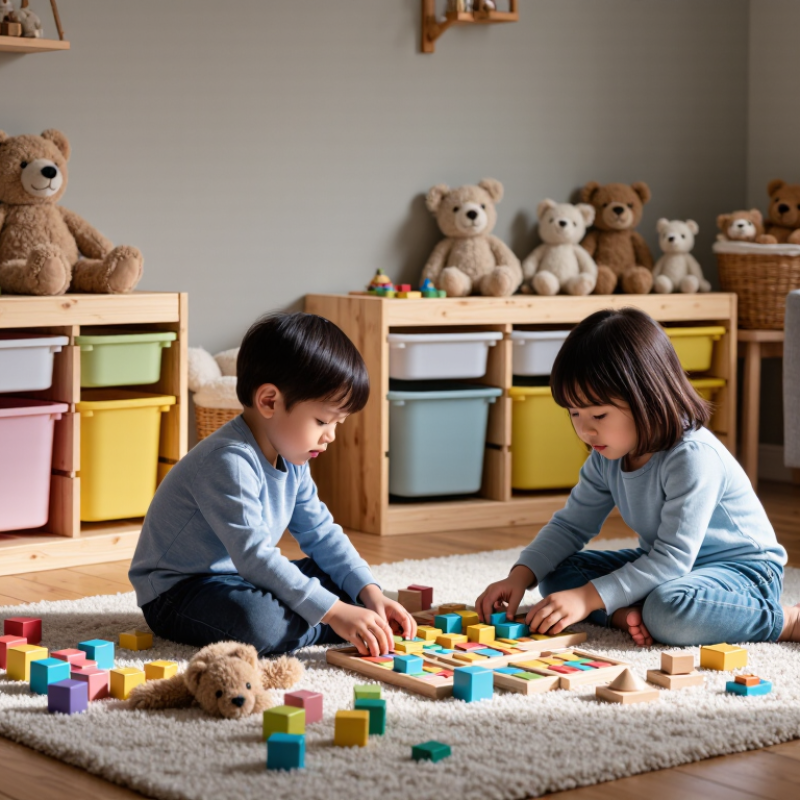
Create one zone for active play near the rug or table. Use open baskets for blocks, vehicles, and soft toys. Children can see the choices and return them quickly. Place art supplies in a higher, supervised zone. Keep puzzles and small parts in labeled containers.

Store rotating toys in a closet, rather than displaying everything. The American Academy of Pediatrics emphasizes play’s developmental value, so storage should protect access, not eliminate it. My own experience suggests that one large “miscellaneous” bin becomes a hiding place for unfinished decisions. That part needs honest review.

Tips: Measure the shelf before buying containers. Keep heavy bins low. Use picture labels for younger children. Try a five-minute reset after dinner. Review the zones monthly, because children’s interests change. If a basket repeatedly overflows, the problem may be its size, not the child. The U.S. Environmental Protection Agency reported that Americans generated about 4.9 pounds of municipal solid waste per person daily in 2018. Buying more organizers can quietly add to the problem. Reuse sturdy boxes first, and remove broken or ignored toys carefully. A neat shelf is not always a useful shelf.

Maintaining a Simple Toy Organization System

A simple toy organization system works best when it is easy to repeat every day. In my experience, children tidy more willingly when each toy has a visible, predictable home. Use broad categories, such as building pieces, pretend-play items, books, and art supplies. Avoid creating too many categories. Labels with words or simple pictures can help younger children return items independently. Keep frequently used toys in open baskets at a child-friendly height.

Limit the number of toys available at one time. Keep one small selection on shelves, then store the rest in a nearby cupboard or closet. Rotate the selection every two or three weeks, depending on your child’s interest. A five-minute evening reset prevents clutter from spreading across the floor. Set a timer and make tidying feel like a shared routine, not a punishment. I once organized toys by exact type, but the system became too complicated and quickly failed. Now, I choose convenience over perfect sorting.

Involve your child in deciding what stays accessible. Ask which toys they still use and watch their choices over several days. Remove broken items promptly and place outgrown toys in a separate container for later review. Do not force immediate decisions about sentimental objects. Some weeks will be messy. That is normal. When a basket becomes difficult to carry, the category probably needs fewer items. A reliable system should survive busy evenings, forgotten resets, and occasional imperfect choices.

FAQS

Why should toy storage zones match family routines?

Storage works better when toys stay near where children actually play. Fewer steps make cleanup easier and reduce visible clutter.

Where should frequently used toys be stored?

Keep them in open baskets near the play rug or table. Children can see choices and return toys quickly.

How should art supplies and small parts be stored?

Place art supplies in a higher, supervised area. Keep puzzles and small pieces in clearly labeled containers.

How many toys should remain available?

Display a small selection and store the rest nearby. Rotate toys every two or three weeks.

Can picture labels help young children?

Yes. Simple pictures can show where blocks, books, or soft toys belong. Children may need reminders at first.

What is a practical daily reset routine?

Set a five-minute timer after dinner. Tidy together without treating cleanup like punishment.

What should you do when a basket overflows?

Check the basket size and item quantity. The child may not be the problem.

Why can one miscellaneous bin become unhelpful?

It often hides unfinished sorting decisions. A broad category can work, but total mixing may create confusion.

Should families buy more organizers?

Not always. Reuse sturdy boxes first, because extra organizers can create more waste and expense.

How should families handle broken or ignored toys?

Remove broken items promptly. Place outgrown toys separately, then review them later without rushing sentimental decisions.

What makes a toy organization system reliable?

Each toy needs a visible, predictable home. The system should survive busy evenings and imperfect choices. Perfect sorting is not required.

Conclusion

Reducing toy clutter begins with understanding why it accumulates and how it affects daily life. Too many unused, broken, or repetitive toys can make rooms feel stressful, complicate cleaning, and make it harder for children to focus on meaningful play. A practical approach to How to reduce toy clutter at home is to review every item and decide whether it is actively used, age-appropriate, complete, and in good condition. Toys that are loved and useful can stay, while damaged, forgotten, or outgrown items can be repaired, donated, recycled, or responsibly discarded.

After making these decisions, sort the remaining toys by purpose, condition, and ownership. Create simple storage zones for categories such as building toys, creative supplies, books, and outdoor items, using clearly defined spaces that children can access easily. Avoid overcrowding by giving each category a reasonable limit and leaving room for items to be returned. Finally, maintain the system with short weekly tidying sessions, occasional reviews, and a simple one-in, one-out habit when new toys arrive.

Ethan

Ethan

Ethan is a seasoned marketing professional with a deep expertise in our company's innovative product line. With a passion for sharing knowledge and insights, he takes the lead in regularly updating our corporate blog, where he explores industry trends, product features, and effective marketing......