In 2026, the best toys for creativity do more than entertain; they give children room to imagine, test ideas, and make something their own. What toys help with creativity? Often, the answer is a simple, open-ended set: wooden blocks, washable paints, modeling clay, or building pieces that can become many things. A cardboard box can work, too. The toy matters, but so does the freedom to use it in unexpected ways.
This guide looks at creative toys through practical questions: Can a child use them in different ways? Do they suit the child’s age and interests? Are the materials durable, and are small parts clearly identified? A set of magnetic tiles might become a lopsided tower one afternoon and a pretend shop the next. That is useful play, even when the result looks unfinished. Not every child enjoys the same materials, and a highly praised toy can sit untouched on the shelf. I’ve seen that happen. It’s worth noticing what a child returns to, rather than assuming a bigger set is always better.
The sections ahead compare toy types, explain what skills they can encourage, and offer tips for choosing thoughtfully. Creativity is difficult to measure in a single play session. Look for curiosity, experimentation, and the willingness to try again. That’s a better clue.
What Creativity Means in Play and How Toys Support It
Creativity in play is not just making something pretty. It includes imagining possibilities, testing ideas, and changing course when a plan fails. OECD’s PISA 2022 Creative Thinking report found that 78% of students across OECD countries reached baseline proficiency. The assessment asked teenagers to generate and improve ideas. Young children practice similar habits when they turn blocks into a bridge, then rebuild after it wobbles.
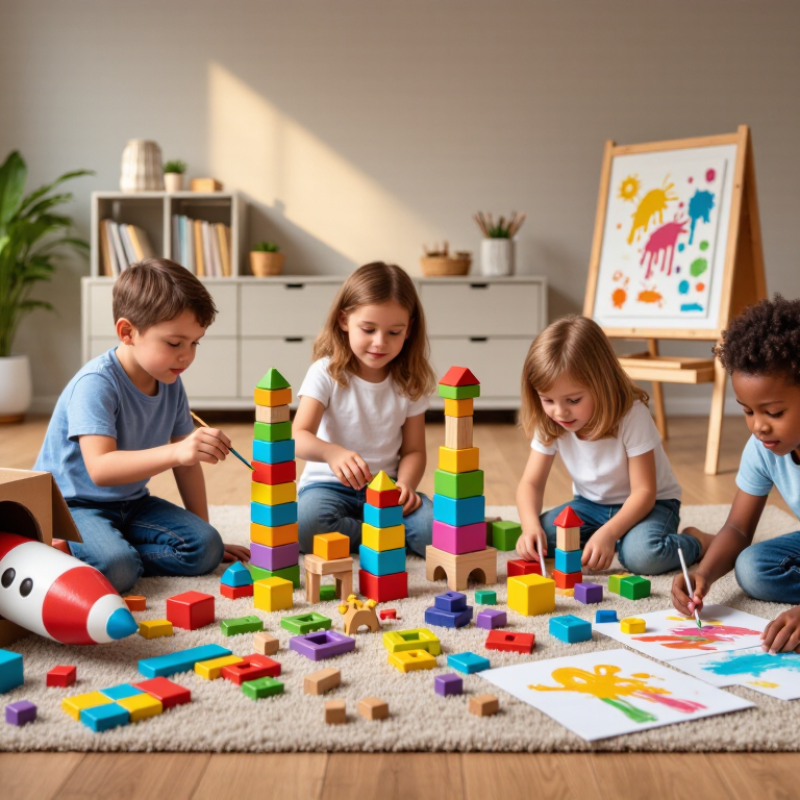
Toys support creativity when they leave room for decisions. A set of plain blocks can become a shop, a tower, or a hiding place for toy animals. Open-ended art materials invite children to mix colors, tear paper, and discover unexpected textures. The toy itself need not be elaborate. A cardboard tube may inspire more ideas than a button-filled gadget, though adults may find the mess less inspiring.
A useful choice offers enough structure to begin, but not one correct result. Watch what a child does: Do they invent a story, combine pieces, or try again after a collapse? These small moments reveal more than a toy’s feature list. The World Economic Forum’s Future of Jobs Report 2025 says 39% of workers’ core skills are expected to change by 2030, reinforcing the value of flexible thinking. Still, no toy guarantees creativity. Children also need time, space, and adults willing to let an odd idea unfold. Sometimes that means resisting the urge to fix the crooked tower.
Main Types of Toys That Encourage Creative Thinking
What Are the Best Toys for Creativity in 2026?
Main Types of Toys That Encourage Creative Thinking
Open-ended building toys give children room to invent rather than follow one fixed outcome. Blocks, interlocking shapes, and simple construction pieces can become a bridge, a tower, or a lopsided creature. That flexibility matters. When a structure falls, children can test a wider base or try a different shape. No toy creates creativity by itself, though; time and permission to experiment matter too.
Art and craft materials encourage children to turn ideas into visible things. Crayons, washable paint, paper, and reusable modeling clay offer different textures and challenges. A child might press leaves into clay, then draw the pattern they noticed. Keep supplies suitable for the child’s age, and make cleanup manageable. A crowded table can stifle play.
Pretend-play toys, such as toy kitchens, figures, and fabric costumes, help children build stories and practice seeing situations from another point of view. Puzzles and musical toys can also invite creative problem-solving, especially when children can change the rules or make their own rhythms. Less can be more. A box of mixed pieces may inspire a better game than a complicated toy with only one intended use. Adults can join in, but asking “What happens next?” often works better than taking over. I still think some play looks messy or pointless from the outside. That may be part of its value.
How to Choose Creative Toys for Different Ages and Interests
What Are the Best Toys for Creativity in 2026?
How to Choose Creative Toys for Different Ages and Interests
Choose toys for a child’s current abilities, not just the age printed on the box. Toddlers often enjoy stacking cups, chunky blocks, and washable drawing tools they can handle safely. Preschoolers may prefer pretend kitchens, dress-up clothes, or dough that turns into “dinner.” Keep pieces easy to grasp and cleanup manageable. Let them repeat.
For school-age children, look for materials with more than one possible result: cardboard, simple building pieces, craft supplies, or beginner science kits. Match them to interests. A child who loves stories might make a puppet stage; a budding naturalist could sketch leaves outdoors. The American Academy of Pediatrics’ 2018 clinical report, The Power of Play, describes play as supporting children’s development and learning. Open-ended play gives children room to make choices, not just follow steps.
Older children may enjoy design challenges, music tools, model-making, or coding activities, depending on their interests and patience. OECD’s PISA 2022 creative-thinking assessment covered 64 countries and economies, testing how 15-year-olds generate and improve ideas. It was not a toy study, but it reinforces the value of flexible thinking. Check whether instructions invite experimentation, and whether the child can adjust the difficulty. A lopsided first attempt is still useful. Some kits may frustrate more than inspire; watch how the child responds, then simplify or switch materials.
Creative Toys by Age: Milestones to Inspire Your Choice
Use developmental milestones as a starting point, then choose toys that match a child’s interests—building, drawing, storytelling, or pretend play.
How to use this chart: At around 2½, offer simple pretend-play props; around 3, try washable drawing tools; around 4, add dress-up or imaginative-play materials; and around 5, offer paper and art materials for drawing people and stories. Let the child’s interests guide the choice, and check age labels and small-parts safety.
Milestones shown are from the CDC developmental milestones checklist—skills most children (75% or more) can do by the stated age. They are guides, not deadlines. CDC developmental milestones.
Key Features to Compare When Evaluating Creative Toys in 2026
When comparing creative toys in 2026, look for choices rather than one fixed result. Can a child build a bridge, then turn the same pieces into a small animal? Open-ended sets invite experimentation and let skills grow over time. A toy that produces only one polished outcome may lose its appeal quickly. Still, more pieces do not always mean more creativity.
Check how clearly the toy supports different ages and abilities. Pieces should be manageable for the intended age, with readable instructions and enough room for children to improvise. For physical products, review the age guidance, material details, and safety information before buying. Durability matters too: loose joints, brittle pieces, or paint that wears off can shorten a toy’s useful life. That matters. A washable surface and a box that keeps parts together are practical features, not glamorous ones.
Consider whether the toy encourages making, testing, and revising, rather than simply following steps. A simple craft kit might offer varied materials and suggest several projects without prescribing every move. For digital toys, compare screen time, privacy information, and whether the activity works without constant prompts. Price should be weighed against repeat use, replacement parts, and storage needs. I would not treat any checklist as perfect; children sometimes prefer the plain cardboard box. But observing what they return to can reveal more than a dramatic product description.
How Digital and Hands-On Toys Can Work Together for Creativity
What Are the Best Toys for Creativity in 2026?
How Digital and Hands-On Toys Can Work Together for Creativity
Digital and hands-on toys can complement each other when children make, test, and revise their own ideas. A tablet might display a child’s animated story, while paper figures and blocks give its characters a physical world. The screen offers quick changes; real materials add texture, balance, and the occasional collapse. That matters. Creativity grows through experimenting, not just tapping preset effects. The American Academy of Pediatrics identifies play as important for children’s cognitive, physical, and social-emotional development.
Tips: Invite children to sketch a design on screen, then build it with cardboard, clay, or blocks. Let them photograph the result and change one detail in a digital version. Keep the activity open-ended. Then pause. Ask, “What would you change?” rather than correcting the result.
A 2022 global play-industry survey of 25,000 parents and children across 35 countries reported that nine in ten parents believed play supports children’s creativity. That is encouraging, but it is survey evidence, not proof that any single toy causes creative growth. Watch what a child actually does: Do they invent rules, combine materials, or return to a project after it fails? A clever app can still narrow choices, and a box of blocks can sit untouched. The pairing works best when the child leads and an adult makes room for unhurried play.
Conclusion
Creativity in play means imagining possibilities, experimenting with ideas, and making something in a child’s own way. What toys help with creativity? Open-ended options such as building pieces, art materials, pretend-play props, puzzles, and simple science or craft kits invite children to invent, explore, and solve problems rather than follow only one set of instructions. The best choice depends on a child’s age, interests, abilities, and preferred way of playing, with room to grow as their skills develop.
When comparing creative toys in 2026, consider whether they encourage choice, experimentation, and repeated use; whether they are suitable for the child’s age; and whether their materials and instructions are clear and practical. Digital tools can add opportunities to design, tell stories, or explore ideas, while hands-on play gives children a chance to build and create away from a screen. Used together thoughtfully, both kinds of play can support curiosity, self-expression, and imaginative thinking.
 Trues Toys
