Trues Toys
The benefits of sensory toys for children's development are increasingly recognized. Dr. Lisa Miller, an expert in child psychology, states, "Sensory toys provide children the tools to explore their world." This highlights the essential role these toys play in growth and learning.
Sensory toys come in various textures, colors, and sounds. They engage children's senses, fostering curiosity and creativity. Children with sensory processing challenges often find calmness and focus through these toys. They stimulate motor skills and promote cognitive development.
However, not every sensory toy suits all children. Parents should observe their child's preferences and needs. With the right choice, families can enhance learning while ensuring playtime remains enjoyable. Ultimately, this leads us to ponder: Why are sensory toys good for children? They are more than just toys; they are crucial for development.
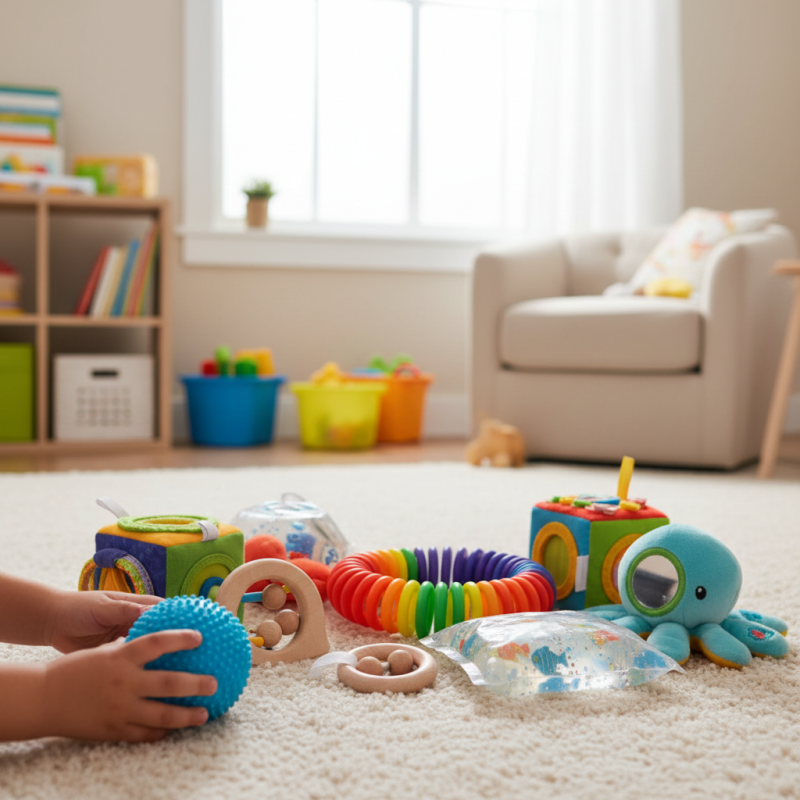
Sensory toys play a significant role in cognitive development for children. They engage multiple senses, helping kids explore their surroundings. According to a report by the American Academy of Pediatrics, sensory play enhances brain development and improves critical thinking skills. These toys encourage creativity and problem-solving, essential skills for lifelong learning.
The variety of textures, colors, and sounds stimulates a child's senses. For example, a child playing with a variety of fidget toys can improve their fine motor skills significantly. Research has shown that children who engage in sensory activities are more likely to show better attention spans. A study published in the Journal of Applied Developmental Psychology indicated that sensory engagement can lead to increased memory retention.
Tips: Incorporate sensory toys into daily routines. Allow children to explore these toys freely. Observe their interactions and be ready to engage in meaningful conversations about what they are experiencing. This can deepen their understanding and enhance their cognitive skills. Sensory play is not just fun; it lays the foundation for critical life skills.
Sensory toys play a crucial role in developing children's motor skills. These toys are designed to engage multiple senses, providing tactile, visual, and auditory experiences. Children explore textures, colors, and sounds that stimulate their brains. As they interact with these toys, they practice grasping, squeezing, and manipulating objects. These actions directly improve both fine and gross motor skills.
Fine motor skills involve small movements, such as using fingers and hands. Toys like building blocks or soft balls require children to use their fingers in various ways. This helps enhance their hand-eye coordination and dexterity. Gross motor skills, on the other hand, involve larger movements with arms and legs. Toys that encourage jumping or crawling allow for physical activity that strengthens muscles and coordination.
Some children may struggle to engage with sensory toys due to various reasons. It may take time for them to feel comfortable with new textures or sounds. Patience is essential as they explore their environment. It's important for caregivers to offer support without rushing the process. The journey of learning through play is messy and filled with trial and error. The progress may be slow, but every small achievement counts in their development.
Sensory toys play a vital role in children’s emotional regulation. These toys stimulate the senses and help children learn to manage their feelings. For example, a squishy toy can provide comfort during stressful moments. The act of squeezing can release built-up tension. Such activities allow children to express emotions in a healthy way.
In addition to emotional regulation, sensory toys foster social skills. When children engage with these toys together, they learn the value of sharing. They practice communication while negotiating how to use the toy. Sometimes, conflicts arise over who gets to play with a certain toy. This gives them a chance to resolve issues, an important skill for future interactions.
Yet, not all children respond positively to sensory toys. Some may feel overwhelmed by certain textures or noises. This can lead to frustration rather than enjoyment. Observing how each child interacts with these toys is crucial. Reflection on these interactions can inform future play experiences. It’s essential to tailor the use of sensory toys to meet the unique needs of each child.
Sensory toys are invaluable tools for children's growth. They cater to various developmental needs, often supporting fine motor skills and sensory processing. For instance, textured balls and fidget spinners help children improve their grasp and coordination. A report from the National Center for Learning Disabilities highlights that 1 in 5 children struggle with sensory issues. Sensory toys can provide relief and a means to engage actively with their environments.
Different types of sensory toys serve various purposes. Chewable jewelry, for example, aids children who seek oral stimulation. They can promote focus and calmness during stressful situations. Additionally, weighted blankets offer comfort and can help children with anxiety. A study by the Journal of Pediatric Health Care shows that 70% of parents noted improved behavior in their children when using sensory toys. These insights underline the importance of selecting appropriate tools tailored to individual needs.
It's essential to recognize that each child responds differently. Not all sensory toys will benefit every child the same way. Some children may feel overwhelmed by certain textures or sounds. This variability in sensory preferences calls for careful observation and adjustment. As parents and educators explore these tools, they should remain open to trial and error, finding what truly enhances each child's development.
Sensory play is crucial for children's development, supported by a variety of research. Studies show that sensory toys engage young minds, offering opportunities for exploration. These toys can help improve fine motor skills and enhance cognitive development. A report by the American Occupational Therapy Association highlights that sensory experiences are essential for neural development in early childhood.
Moreover, the National Association for the Education of Young Children indicates that sensory play fosters emotional regulation. Children learn to identify and express their feelings through varied textures and sounds. Research also reveals that sensory activities can aid children with special needs. Sensory toys can create calming environments, helping kids manage anxiety and improve focus.
While sensory play is beneficial, it is not always straightforward. Some children may find certain stimuli overwhelming. It is important for parents and educators to observe children’s reactions. Finding the right sensory toys can take time and experimentation. Tailoring the sensory environment to meet each child’s needs is essential for success.
: Sensory toys are designed to engage multiple senses. They include various textures, colors, and sounds.
Sensory toys enhance brain development. They improve critical thinking and creativity in children.
These toys enhance fine and gross motor skills. Examples include grasping toys for fine skills and jumping toys for gross skills.
Some children may take time to engage. Patience is crucial as they explore new textures and sounds.
Sensory experiences help children express their feelings. Varied textures and sounds support emotional understanding.
Not necessarily. Some children might find certain stimuli overwhelming. Careful observation is needed to tailor their experiences.
It's common for children to struggle initially. Providing support and allowing time for exploration is key to success.
Include sensory toys in daily routines. Encourage free exploration and engage in discussions about their experiences.
Yes, research highlights the importance of sensory experiences for neural and emotional development in early childhood.
Progress can be slow and messy. Every small achievement in exploring toys counts in children's development.
Sensory toys play a crucial role in children's development by enhancing various cognitive and physical skills. They provide stimulating experiences that promote cognitive growth, helping children to explore and understand the world around them. By engaging with sensory toys, children can improve their fine and gross motor skills through activities that require manipulation and coordination. Furthermore, these toys are essential for emotional regulation, allowing children to express their feelings and develop social skills by interacting with peers during play.
Research and studies support the significance of sensory play in child development, highlighting how these toys cater to various developmental needs. Different types of sensory toys offer specific benefits; for instance, tactile toys can enhance touch sensitivity, while auditory toys may improve auditory processing. In summary, the question of "Why are sensory toys good for children" is answered through their multi-faceted benefits that support cognitive, physical, and emotional growth.
