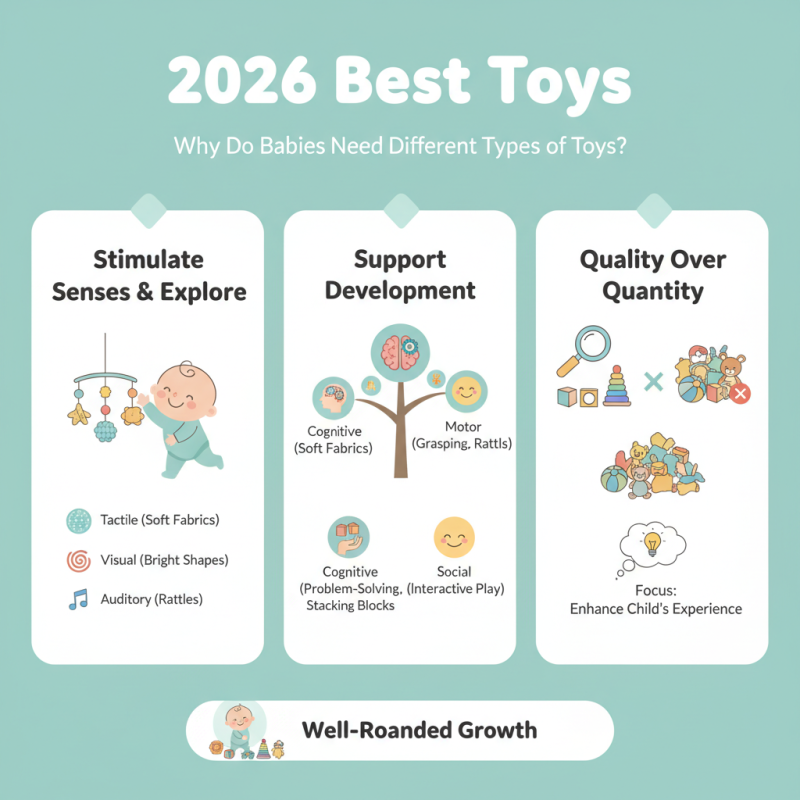
When considering the developmental needs of babies, the question arises: "Why do babies need different kinds of toys?" Each type of toy serves a unique purpose in supporting growth and learning during these formative years. Babies are naturally curious, and toys can captivate their attention, stimulate their senses, and inspire exploration.
From soft fabrics that promote tactile engagement to colorful shapes that enhance visual skills, each toy plays a vital role. Different types of toys encourage cognitive, motor, and social development. For instance, rattles can refine grasping skills, while stacking blocks introduce problem-solving.
However, parents may struggle with choices. With countless options, it’s essential to focus on quality over quantity. Not every toy will capture a baby's interest or aid in their learning. Reflecting on which toys truly enhance a child's experience is crucial. Balancing playtime with diverse toys ensures a well-rounded developmental approach.
Types of Toys and Their Impact on Baby Development
The right toys play a vital role in a baby's development. From birth to three years, children experience rapid brain growth. According to the American Academy of Pediatrics, play is essential for cognitive, social, and emotional development. Different types of toys stimulate various skills in babies. For example, soft toys promote sensory exploration, while building blocks enhance fine motor skills.
Research indicates that children benefit greatly from interactive toys. A 2021 study found that babies who played with interactive toys showed higher levels of engagement and problem-solving skills. For cognitive development, choose toys that encourage exploration and creativity.
Tips: Rotate toys regularly to maintain your baby’s interest and encourage new skills. Engaging in playtime with your baby can enhance their learning experience. Remember that not all toys need to be complex; often, simple items stimulate curiosity and imagination. Embrace the mess and imperfections during playtime; it’s part of the learning process. Let babies lead the play to foster independence and confidence.
Cognitive Benefits of Different Toy Categories
When it comes to baby toys, variety plays a crucial role in development. Different types of toys can stimulate various cognitive skills. For instance, soft stuffed animals encourage emotional bonding, while colorful blocks foster problem-solving skills. Babies learn about cause and effect when they stack blocks and knock them down. This interaction promotes their understanding of spatial relations and motor skills.
Toys that incorporate sound and light can enhance sensory development. Rattles or musical toys attract a baby's attention, guiding them to explore sounds. These toys can improve listening skills and auditory processing. However, too much stimulation can overwhelm a baby. It’s essential to strike a balance, allowing babies to explore at their own pace.
Moreover, open-ended toys encourage creativity. Simple materials, like fabric or cardboard, can be transformed into various play scenarios. This flexibility helps develop imagination, but it also requires guidance from adults. Some parents may find it challenging to provide the right level of support. Finding the right mix of toys is an ongoing journey. Each baby's preferences and developmental needs are unique.
Physical Play: Encouraging Motor Skills with Diverse Toys
In the journey of growth, physical play is essential for babies. Different types of toys stimulate various motor skills. Soft blocks and rattles encourage grasping. A baby learns to reach and throw, which builds strength. These actions enhance coordination, necessary for future movement.
Balance toys, like sit-to-stand walkers, are crucial too. They support stability while encouraging walking. This process allows babies to experiment with balance. They often fall, which is a natural part of learning. Each tumble teaches resilience and body awareness.
Exploring toys of different shapes and textures is also beneficial. Textured balls and fabric books engage tactile senses. They inspire curiosity, making babies want to touch and discover. However, choosing the right toys can be challenging. Some toys might not be engaging enough, leading to frustration. It’s important for caregivers to observe what captivates their child’s interest.
2026 Best Toys: Why Do Babies Need Different Types of Toys?
This chart illustrates the importance levels of various toy types for babies in encouraging developmental skills. Each type of toy plays a crucial role in different areas such as physical, sensory, cognitive, social, and creative play.
Emotional and Social Growth through Interactive Toys
Interactive toys play a vital role in babies' emotional and social development. Research indicates that engaging with toys can help infants learn to express their feelings. A study from the American Academy of Pediatrics found that interactive play fosters communication skills and emotional awareness in young children. Through play, infants begin to understand turn-taking and sharing, which are essential social skills.
Moreover, these toys can contribute to bonding moments. When caregivers engage with babies during play, it enhances attachment. The Journal of Child Development emphasizes that this interaction is key to emotional health. Babies exposed to varied kinds of toys will develop better social strategies. They learn to navigate different emotions, both theirs and others'. However, some parents may worry about screen time or overstimulation. Finding the right balance is crucial.
Not all toys are created equal. Some may offer novelty without educational value. A report from the Toy Association states that toys should encourage imagination and problem-solving. Parents should observe their child's interactions. Reflection on these experiences helps identify what type of toys support their growth best. It’s essential to choose wisely.
Choosing Age-Appropriate Toys for Your Baby’s Stages
Choosing age-appropriate toys for babies is crucial. Babies at different stages have unique developmental needs. By selecting the right toys, we can support their growth. For example, infants benefit from toys that stimulate their senses. Rattles and soft cloth toys can captivate a baby’s attention.
As babies grow, their interests change. At six months, they start to explore everything with their mouths. Toys that are safe to chew on, like silicone blocks or teething rings, are perfect. By twelve months, babies become more mobile. They enjoy push toys and stacking blocks that challenge their coordination. Each new toy should encourage their curiosity and motor skills.
It’s important to reflect on the toys we choose. Sometimes, we might pick toys that look exciting but are not suitable. A toy that is too complex may frustrate a baby rather than entertain. Observing how your baby interacts with different toys can provide insight into what they truly need. Understanding these stages will allow us to better support their development.
FAQS
: Variety in toys stimulates different cognitive skills and supports overall development.
Soft stuffed animals encourage emotional bonding and social development in babies.
Colorful blocks foster problem-solving skills and understanding of spatial relations through stacking and knocking down.
Toys with sound and light enhance sensory development and improve listening skills but can overwhelm if overused.
Open-ended toys, like fabric or cardboard, encourage creativity and imaginative play, needing adult guidance for support.
Selecting toys based on developmental stages helps support babies' growth and interest as they progress.
Reflect on the complexity of toys; sometimes exciting toys may not be suitable and can frustrate babies.
Understanding each stage helps in choosing toys that engage curiosity and promote motor skills for growth.
Babies may not engage with toys that look fun but are too complex or unsuitable for their age.
Watching how a baby interacts with toys can show their preferences and developmental needs.
Conclusion
The article "2026 Best Toys: Why Do Babies Need Different Types of Toys?" emphasizes the importance of providing a variety of toys to support diverse aspects of a baby's development. Different types of toys can foster cognitive skills, as they stimulate exploration and problem-solving. Furthermore, engaging with various toys encourages physical play, which is essential for developing motor skills, promoting coordination and strength.
Emotional and social growth is also facilitated through interactive toys that encourage babies to connect with others, paving the way for healthy relationships. Choosing age-appropriate toys is crucial, as it aligns with the developmental stages of babies, ensuring they receive the right type of stimulation at the right time. Ultimately, understanding "why do babies need different kinds of toys" is fundamental to nurturing well-rounded development during their formative years.
 Trues Toys
